8 min read ·
Age Gap Relationships in Persian Culture: An Honest Guide
Age gap relationships in Persian families: why older husbands were the norm, how attitudes are shifting, and how to handle the gap, the family and the future.
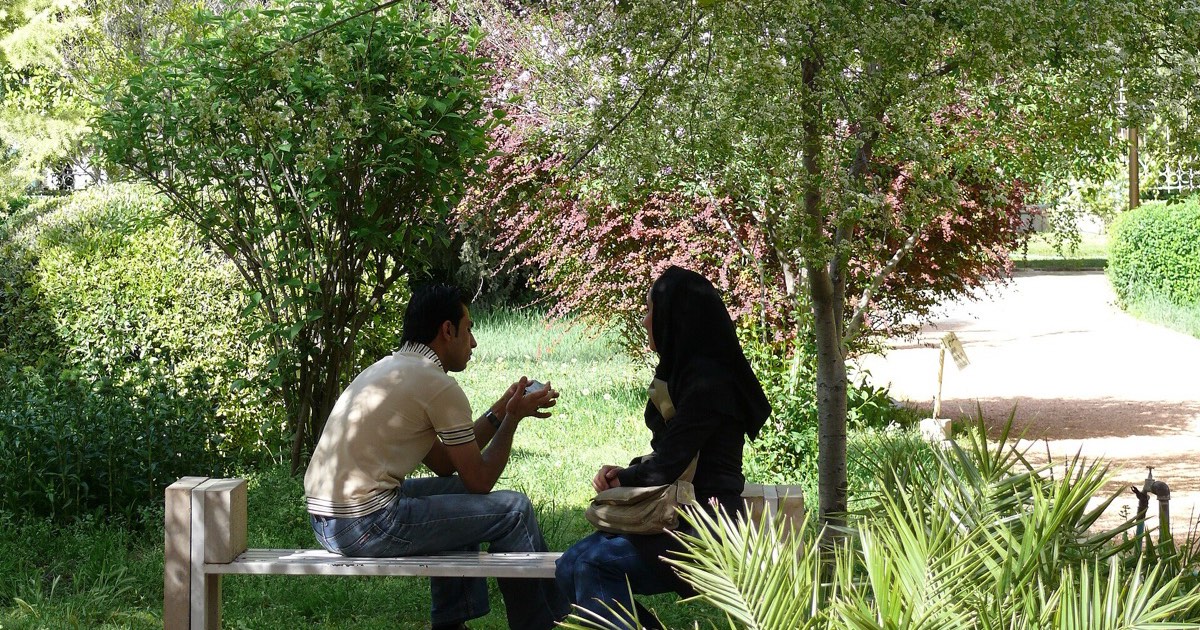
Photo: dynamosquito, CC BY-SA 2.0, Wikimedia Commons
By the Delband team
Age gap relationships in Persian culture carry a particular kind of baggage. In many Iranian families, a husband several years older than his wife was long considered not just acceptable but ideal, while a woman dating a younger man could raise eyebrows at every family gathering. Diaspora life has scrambled those expectations. Today you will meet Iranian couples with a ten-year gap in either direction, and families who react to it in every way imaginable. This guide looks at where those attitudes come from, what actually matters in an age-gap relationship, and how to talk about it with the people you love.
Where the 'older husband' expectation comes from
In traditional Iranian matchmaking, as in many cultures, the expectation was that a man should be established before marriage: finished with his studies or military service, working, able to provide a home. That naturally pushed men's marriage age later than women's, and a gap of several years became the default picture of a 'good match'. Older relatives may still see a slightly older husband as a sign of stability and maturity, and a younger husband as a question mark.
Those expectations were rooted in a world where the husband was assumed to be the main earner. In the diaspora, where both partners usually work and many women out-earn their partners, the logic behind the default is far weaker, even if the instinct lingers. For more on how families weigh these things, see our guide to Persian family dynamics.
Older man, younger woman: the familiar version
A gap of a few years with the man older rarely surprises anyone in an Iranian family. Once the gap reaches ten years or more, though, questions start: why hasn't he married before? Is she being rushed? Will they want the same things? These questions are not always fair, but they are worth taking seriously between the two of you, because they point at real issues: different energy levels, different stages of career, and differing ideas about when to have children.
Older woman, younger man: the shifting taboo
The reverse pairing is where Persian families tend to push back harder, and where second-generation Iranians are most clearly rewriting the rules. Many diaspora couples now include a woman a few years older than her partner, and plenty of families shrug. Others worry, often about children or about what relatives will say. If you are in this situation, it helps to separate the two: practical concerns deserve a real answer, while 'what will people say' (the famous 'harf-e mardom') is usually a worry you can gently decline to carry.
The age on your passport tells your family very little. How you treat each other in front of them tells them almost everything.
What actually matters more than the number
| Topic | Why it matters | A question to ask each other |
|---|---|---|
| Children | Fertility timelines and energy for parenting differ with age | Do we want children, and roughly when? |
| Career stage | One partner may be building while the other is settling or retiring | Whose career takes priority in the next five years? |
| Money | Gaps in savings and income can create quiet imbalance | How will we split costs fairly, not just equally? |
| Health and later life | A large gap may mean one partner caring for the other | Have we talked honestly about growing older together? |
| Social life | Friends and family may be at very different stages | Do we enjoy each other's people, not just each other? |
None of these questions have right answers, and couples with no age gap face them too. The difference is that a gap makes them arrive earlier and more visibly. Talking about them openly is a sign of seriousness, and if you are heading towards marriage, it will make the conversations covered in Persian dating for marriage much easier.
Telling Persian parents about an age gap
Lead with the person, not the number
Introduce your partner's character, work and kindness first. Age is one fact among many, not the headline.
Answer the worry under the question
When a parent asks 'isn't he too old?', the real question is often 'will you be looked after?' or 'will you have children?'. Answer that.
Let them meet in person
Abstract objections often soften once parents have shared a meal with your partner. Our guide to telling Persian parents you're dating covers timing.
Give it time
Many parents start out uneasy and come round within months. A first reaction is rarely a final verdict.
Hold your boundary kindly
You can listen respectfully and still make your own decision. Repeating calmly that you are happy, and showing it, tends to work better than arguing.
Red flags that have nothing to do with culture
- Pressure to move quickly, especially toward marriage, money or immigration paperwork, before you know each other well.
- Requests for money or financial help early on, particularly from someone you have only met online. See our guide to romance scams in the Iranian diaspora.
- Discouraging you from seeing friends or family, or mocking your age, maturity or 'naivety'.
- Keeping you hidden from their own family or friends long after the relationship is serious.
Frequently asked questions
Is an age gap acceptable in Persian culture?
A gap of a few years with the man older has long been seen as normal, even ideal, in many Iranian families. Larger gaps, or a woman older than her partner, can meet more resistance, but attitudes vary widely by family and generation, and diaspora couples increasingly set their own norms.
Do Iranian parents accept an older woman dating a younger man?
Some do without hesitation, others need time. Concerns usually centre on children, stability or what relatives will say. Introducing your partner in person, addressing practical worries honestly and giving parents time to adjust tends to help more than arguing about principles.
How big an age gap is too big?
There is no magic number. What matters is that both people are adults on an equal footing, want compatible things such as children and lifestyle, and that neither holds power over the other. A small gap with a controlling partner is far more worrying than a large gap in a balanced relationship.
Why did Persian men traditionally marry younger women?
Traditionally a man was expected to finish his education or service and become financially established before marrying, which pushed men's marriage age later. In a world where the husband was assumed to be the provider, a few years' age difference was seen as a sign of stability.
Whatever the gap, it starts with meeting someone. Delband is a dating app for the Persian community, with matches sorted by distance and city chat rooms, so the people you meet are ones you could actually have tea with. Free to download on iPhone.