7 min read ·
Fal e Hafez for Love: How the Hafez Fortune Works
Fal e Hafez explained: how Iranians ask Hafez about love, the step-by-step ritual, how to read your ghazal, and why couples still do it on Yalda.
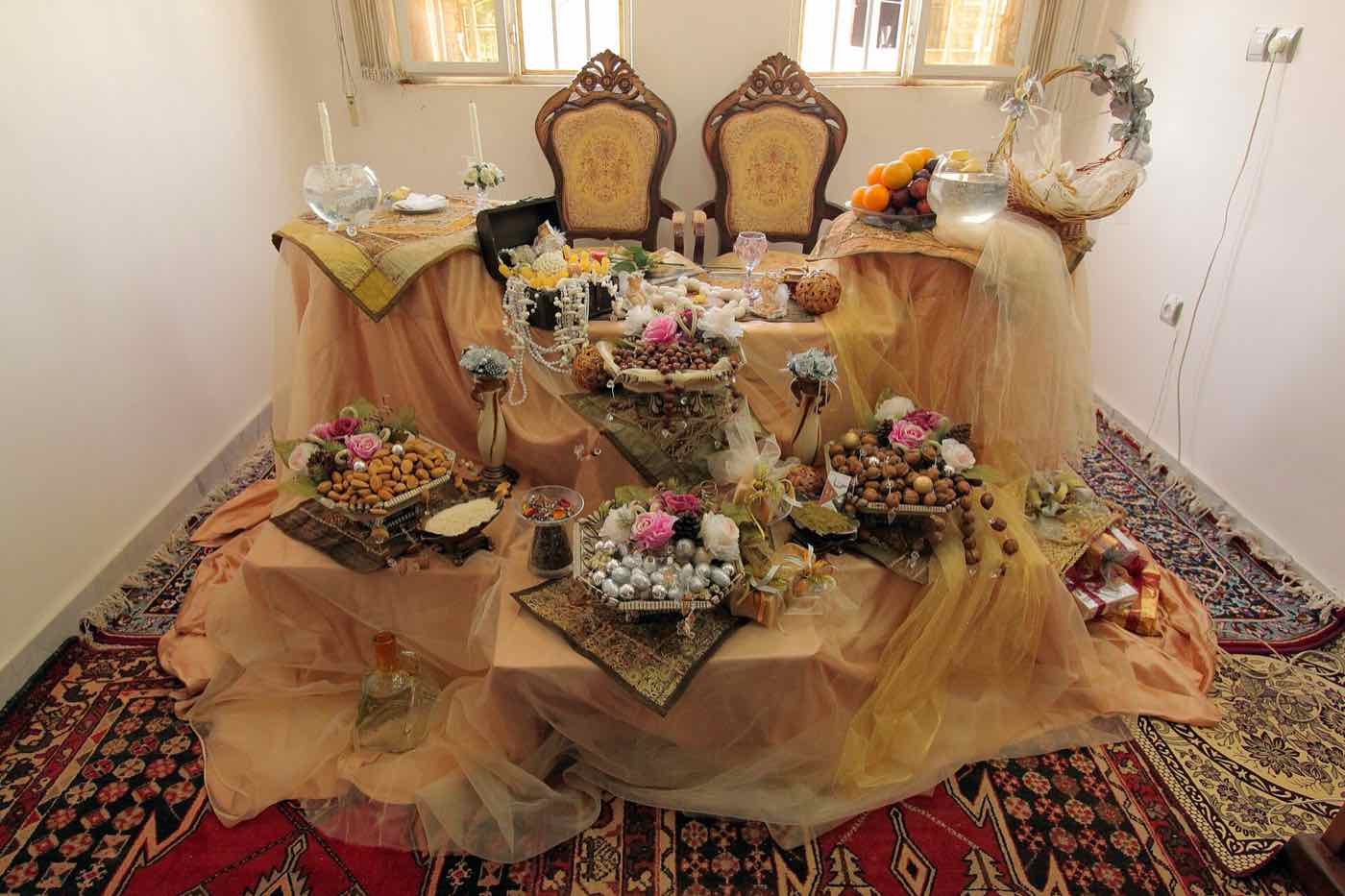
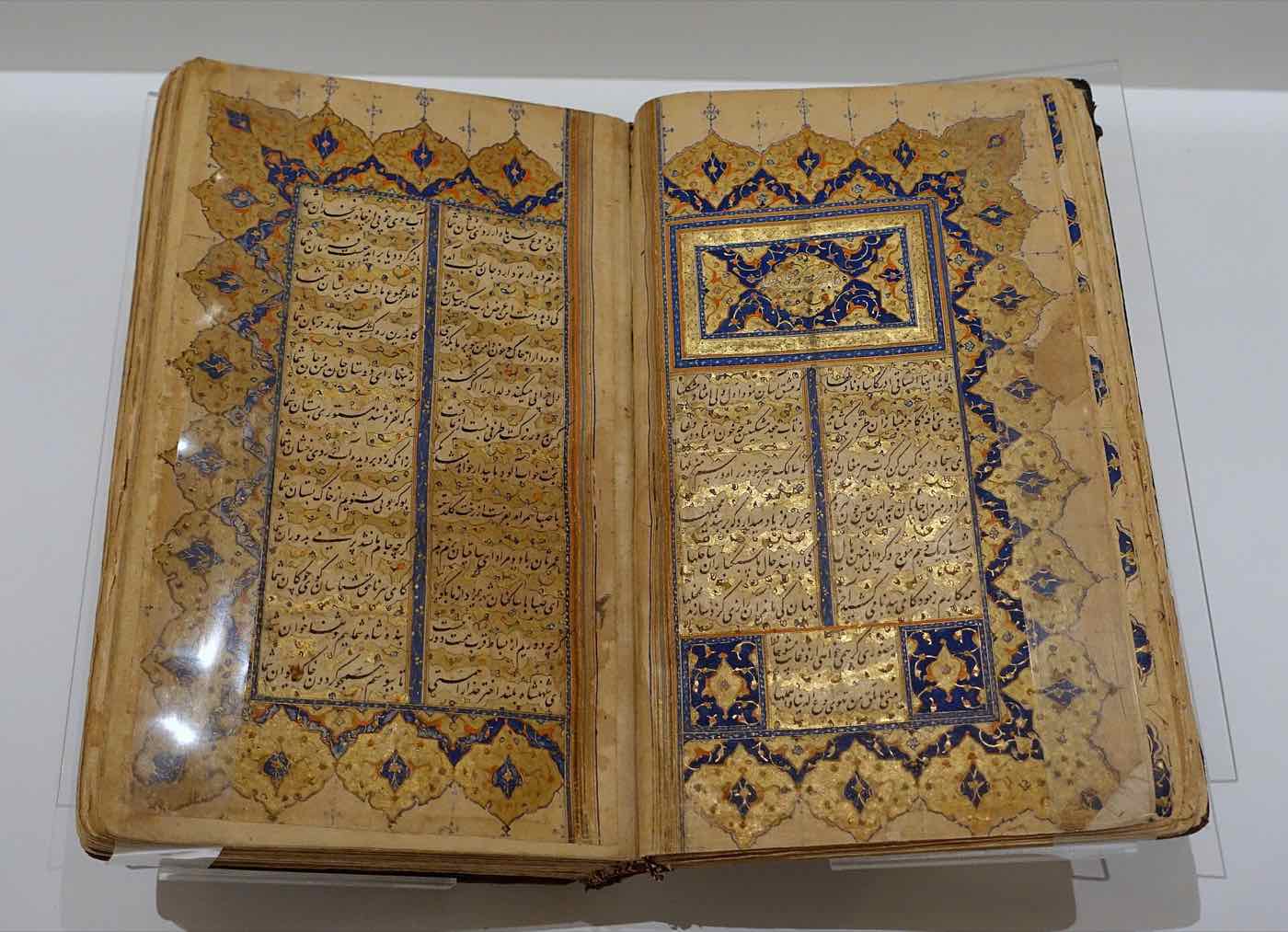
Photo: Masoumeh Alsadat Malakouti, CC BY-SA 4.0, Wikimedia Commons
By the Delband team
Ask an Iranian whether they believe in fal e Hafez and most will laugh and say no. Then hand them a Divan of Hafez and ask about their love life, and watch how carefully they close their eyes before opening it. The fal — a fortune drawn from the poems of Hafez of Shiraz — is one of the most loved Persian customs, and it has always been, above all, a way of asking about the heart.
c.1315–1390
Hafez’s lifetime in Shiraz (Encyclopaedia Iranica)
~500
Ghazals in his Divan, the book used for the fal
Lesan al-Gheyb
His nickname: “Tongue of the Unseen”
What fal e Hafez actually is
Fal (فال) means omen or fortune; fal e Hafez is bibliomancy — opening a book at random and reading the passage as an answer. Encyclopaedia Iranica notes that Hafez’s Divan is widely used this way, and that his nickname Lesan al-Gheyb, “the Tongue of the Unseen”, fuels stories of his poems somehow knowing what the reader needs to hear. No other Persian book is consulted like this so widely.
It isn’t a religious rite, and many people treat it as a game. Some religious scholars have disapproved of it over the years, while plenty of families keep a Divan by the bed regardless. Most Iranians land somewhere in the middle: a fal isn’t a prediction, it’s a beautiful poem that arrives at a moment you happen to be thinking hard about something.
How to do a fal e Hafez, step by step
Hold a question in your mind (niyyat)
Don’t say it out loud. For a love fal, it might be “Is this relationship good for me?” or simply a person’s face.
Address Hafez
Many people recite a short traditional invocation first. A common opening is “Ey Hafez-e Shirazi, to mahram-e har razi” — “O Hafez of Shiraz, you are the keeper of every secret.” Wording varies by family.
Open the Divan at random
Close your eyes, let the book fall open, and place a finger on the page. The ghazal that begins on (or runs across) that page is your answer.
Read it aloud
Traditionally someone else reads it to you. The opening couplets set the mood; the final one, which names Hafez, often feels like a verdict.
Interpret together
Talk about what the images might mean for your question. Is the poem about patience? Separation? A beloved returning? That conversation is the real ritual.
Fal e Hafez for love: how to read your poem
Hafez wrote about love more than anything else — longing for a beloved, waiting at their door, the joy of union and the ache of separation. So when you ask a love question, the poem almost always answers in kind. Readers usually look for a few recurring signals.
| Image in the poem | Often read as | Mood |
|---|---|---|
| Spring, roses, the garden blooming | Good things are on their way | Hopeful |
| The beloved returns / Joseph comes back to Canaan | Reunion, patience rewarded | Very hopeful |
| Wine, the cup-bearer (saqi), a feast | Enjoy the moment; don’t overthink | Light |
| Separation, the beloved’s cruelty | Be patient, or protect your heart | Cautious |
| Hypocrites, the preacher, gossip | Ignore others’ judgement | Defiant |
The most famous “good” fal is the ghazal that begins Yusof-e gomgashteh baz ayad be Kan’an, gham makhor — “Lost Joseph will return to Canaan; do not grieve.” Gertrude Bell translated it in 1897:
From Canaan Joseph shall return, whose face / A little time was hidden: weep no more— / Oh, weep no more! in sorrow’s dwelling-place / The roses yet shall spring from the bare floor!
— Hafez, tr. Gertrude Lowthian Bell, Poems from the Divan of Hafiz (1897), public domain
Draw that one while thinking about someone, and expect the whole room to cheer. For more of the poems you might open to, see our selection of Hafez love poems.
Fal e Hafez in English (if your partner doesn’t read Farsi)
You don’t need fluent Persian to share a fal. Read the original aloud first — the rhyme and rhythm are half the experience — then read a translation. Public-domain translations by Gertrude Bell (1897) and H. Wilberforce Clarke (1891) are free online, and many apps and websites offer a random ghazal with an English version. Be aware that app translations vary a lot in quality; treat them as a starting point for conversation, not the final word.
When people take a fal
- Yalda Night — the winter solstice, when reading Hafez is part of the evening. Our Yalda Night date ideas include a fal for two.
- Nowruz and the days around it, when families gather and the Divan often sits near the haft-sin.
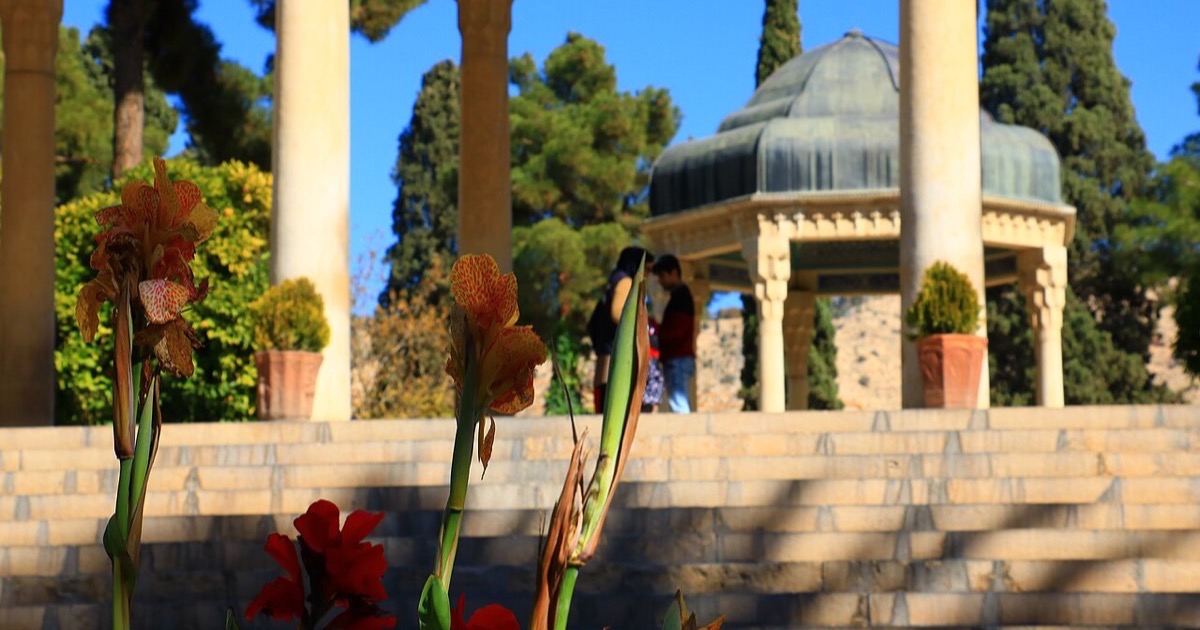
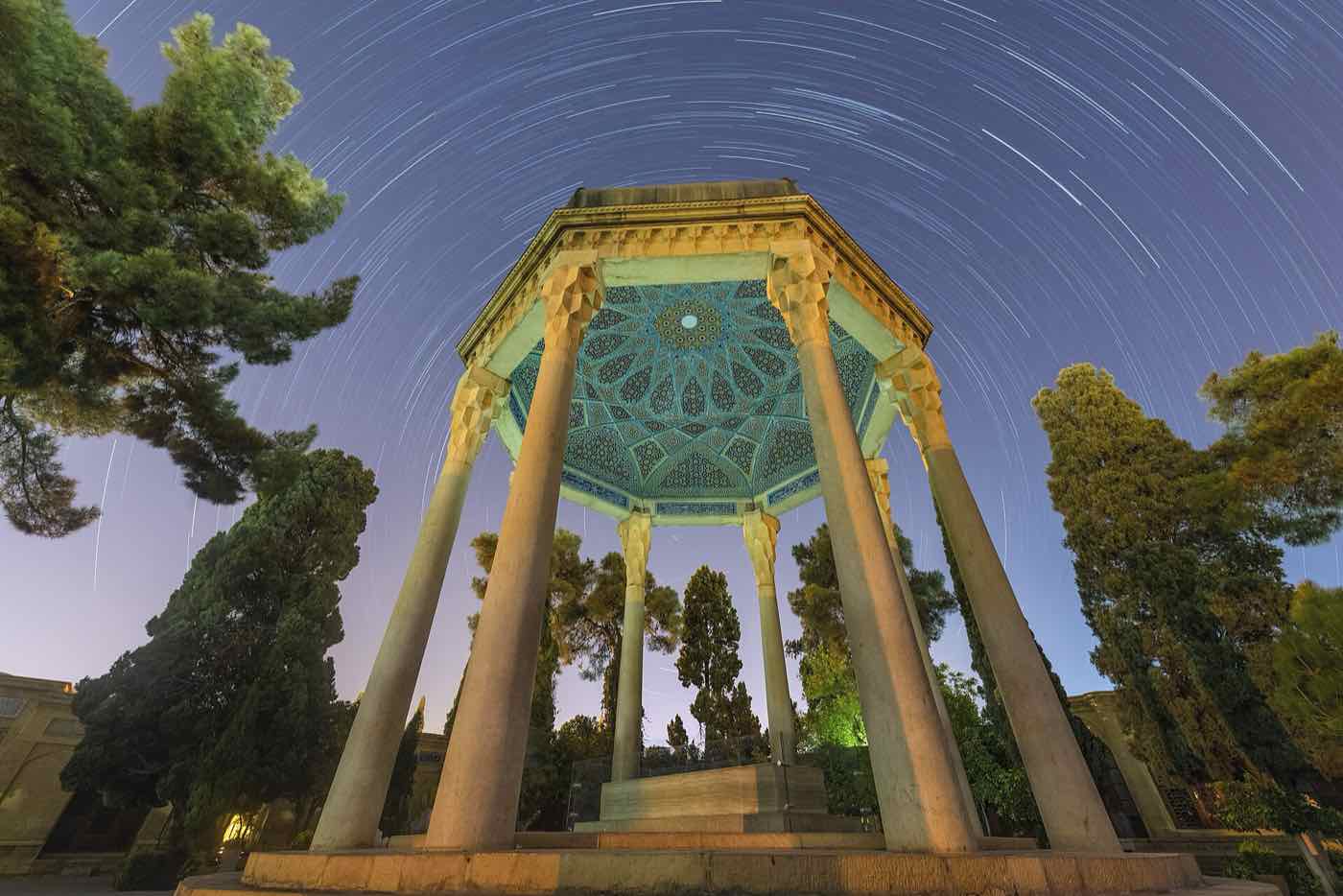
- At the tomb of Hafez in Shiraz, where visitors open the Divan by his grave and fortune-sellers offer folded fal cards.
- Before a big decision — a move, a proposal, a first meeting with the family.
- Any ordinary evening when someone can’t stop thinking about a person.
Fortune birds and fal cards
In Iran you’ll also see fal sold on the street: a vendor with a small bird — often a canary or parakeet — that picks a folded card from a box, each card printed with a Hafez couplet and a short reading. It’s a bit of theatre and a few coins, and many visitors to Shiraz come home with one tucked into a wallet. In the diaspora, the same spirit lives on in printed fal card decks and at community Yalda nights.
One more thing worth knowing: a fal isn’t only for couples. Friends do it for each other at parties, grandparents do it for grandchildren, and plenty of single people open the Divan on a quiet evening to ask whether someone is coming into their life. Hafez has an answer for everyone — that’s rather the point.
If you want to go deeper, try reading the whole ghazal twice: once for the sound, once slowly for meaning. Many couplets hinge on double meanings — the same word can point to a lover, a teacher or the divine — and talking through which reading fits your question is where the fal becomes personal. Families often have one person known for being a good reader of fals; if your partner’s aunt or grandfather has that reputation, ask them to read yours. It’s a lovely way to be welcomed.
Frequently asked questions
What is fal e Hafez?
Fal e Hafez is a Persian tradition of opening the Divan of Hafez, the 14th-century Shirazi poet, at random while holding a question in mind. The ghazal on that page is read as the answer. Most Iranians treat it as a playful, poetic ritual rather than literal fortune-telling.
How do you do a fal e Hafez for love?
Think of your question or the person silently, address Hafez with a short invocation if you like, then open the Divan at random. Read the ghazal on that page aloud and talk about how its images — spring, separation, a beloved returning — relate to your situation.
Can I do fal e Hafez in English?
Yes. Use a bilingual edition or a public-domain translation such as Gertrude Bell’s (1897) or H. Wilberforce Clarke’s (1891), or an app that shows the Persian with English. Reading the Persian aloud first, even haltingly, keeps the music of the original.
Is fal e Hafez religious?
Not really. It’s a cultural custom rather than a religious rite, and it’s practised by Iranians of many backgrounds and beliefs. Some clerics have disapproved of it, and many people simply enjoy it as poetry and a family ritual.
What does it mean if my fal is about separation?
Usually that patience is called for, not that a relationship is doomed. Hafez’s poems about separation often end in hope. Most readers take a sad fal as a nudge to be gentle with yourself — and many simply open the book again another day.
Hafez can’t tell you who you’ll meet, but he’s very good company while you wait. Delband is a free iPhone dating app for the Persian community, with nearby matches and city chat rooms — around Yalda, you’ll find plenty of people there comparing fals.