7 min read ·
Rumi Love Quotes: Real Lines (and Ones He Never Wrote)
Rumi love quotes you can trust: real lines in Persian with public-domain and literal translations — plus the viral “Rumi quotes” that aren’t really his.
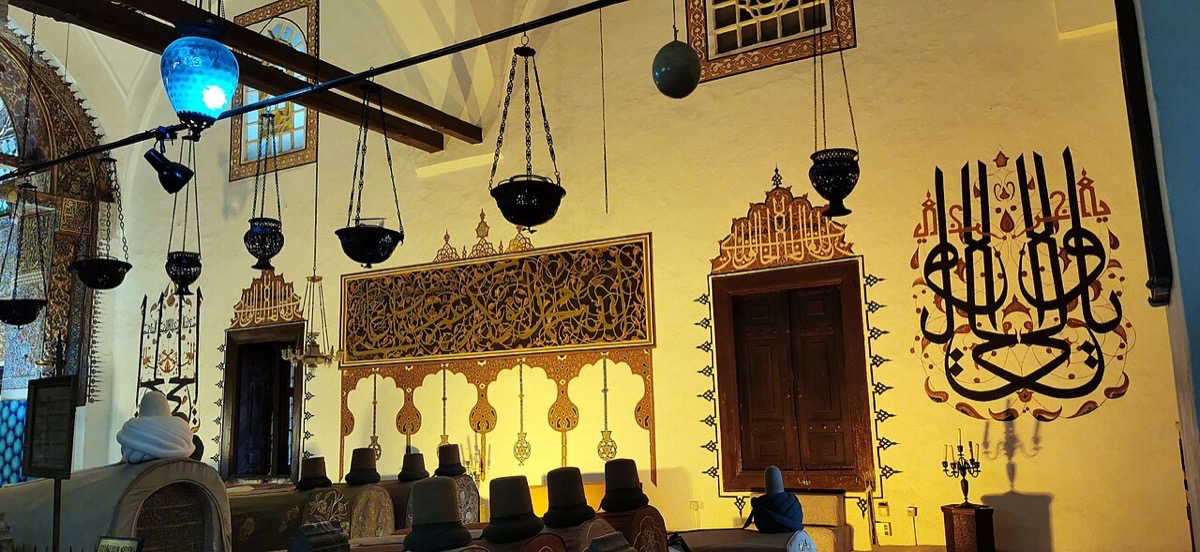
Photo: Murat Özsoy, CC BY-SA 4.0, Wikimedia Commons
By the Delband team
Rumi love quotes are everywhere — wedding programmes, Instagram captions, tattoos. The trouble is that many of the most-shared lines can’t be found anywhere in his Persian poetry. This guide collects real Rumi quotes about love, each with the Persian original and either a public-domain translation or our own literal one, and then looks honestly at the famous lines that are better described as “inspired by Rumi”.
Who Rumi was (and why Iranians call him Mowlana)
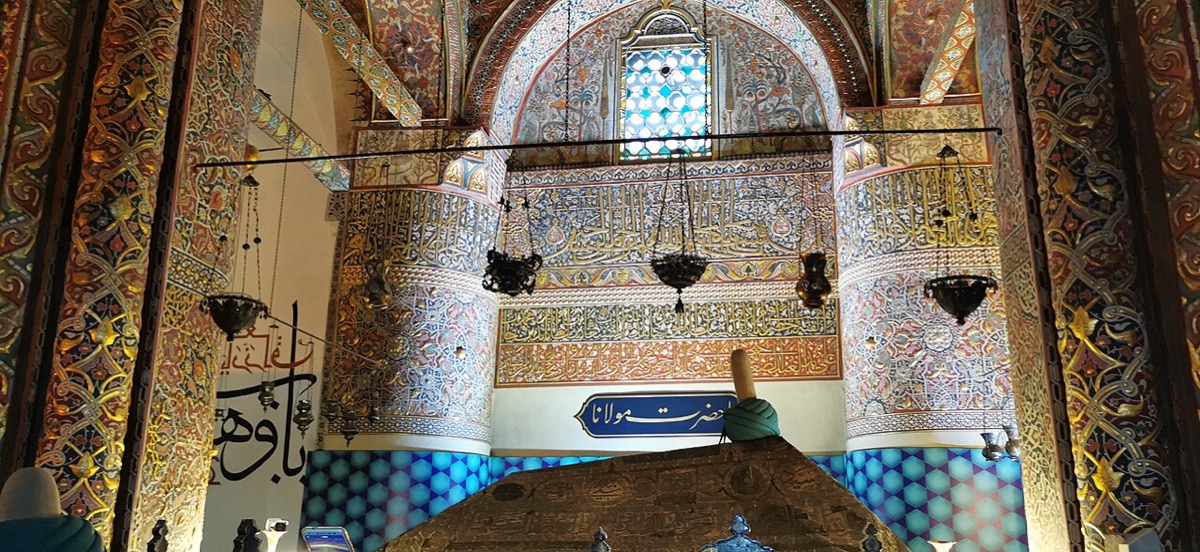
Jalal al-Din Mohammad Rumi was born in 1207 in the eastern Persian-speaking world — sources differ on the exact town, in today’s Afghanistan or Tajikistan — and died in 1273 in Konya, in present-day Turkey, where his tomb still draws visitors. He wrote mainly in Persian. In Iran he’s usually called Mowlana (“our master”) or Mowlavi, rarely “Rumi”.
His two great works are the Masnavi, a vast poem of about 25,000 couplets in six books, full of stories and teaching, and the Divan-e Shams, a collection of ecstatic lyric poems named for his companion and teacher Shams of Tabriz. Both are soaked in love — and in Rumi’s world, human love and the love of God are never far apart.
Real Rumi quotes about love — from the Masnavi
Listen to this reed as it complains — it is telling the story of separations.
— Masnavi I, opening line: بشنو این نی چون شکایت میکند / از جداییها حکایت میکند — literal translation by Delband
The Masnavi begins with a reed flute crying because it was cut from its reed bed. Every Persian speaker knows these lines. The reed is the soul, separated from its source, and its music is longing — which is why so many Iranians feel this couplet as a love poem first.
Hail to thee, then, O LOVE, sweet madness! / Thou who healest all our infirmities!
— Masnavi I — tr. E. H. Whinfield (1887), public domain
No lover ever seeks union with his beloved, / But his beloved is also seeking union with him.
— Masnavi III — هیچ عاشق خود نباشد وصلجو / که نه معشوقش بود جویای او — tr. E. H. Whinfield (1887), public domain
That last couplet is worth remembering: it’s the genuine Rumi idea closest to the viral “what you seek is seeking you”. Whinfield’s version goes on: when the spark of love arises in one heart, be sure it is returned in the other.
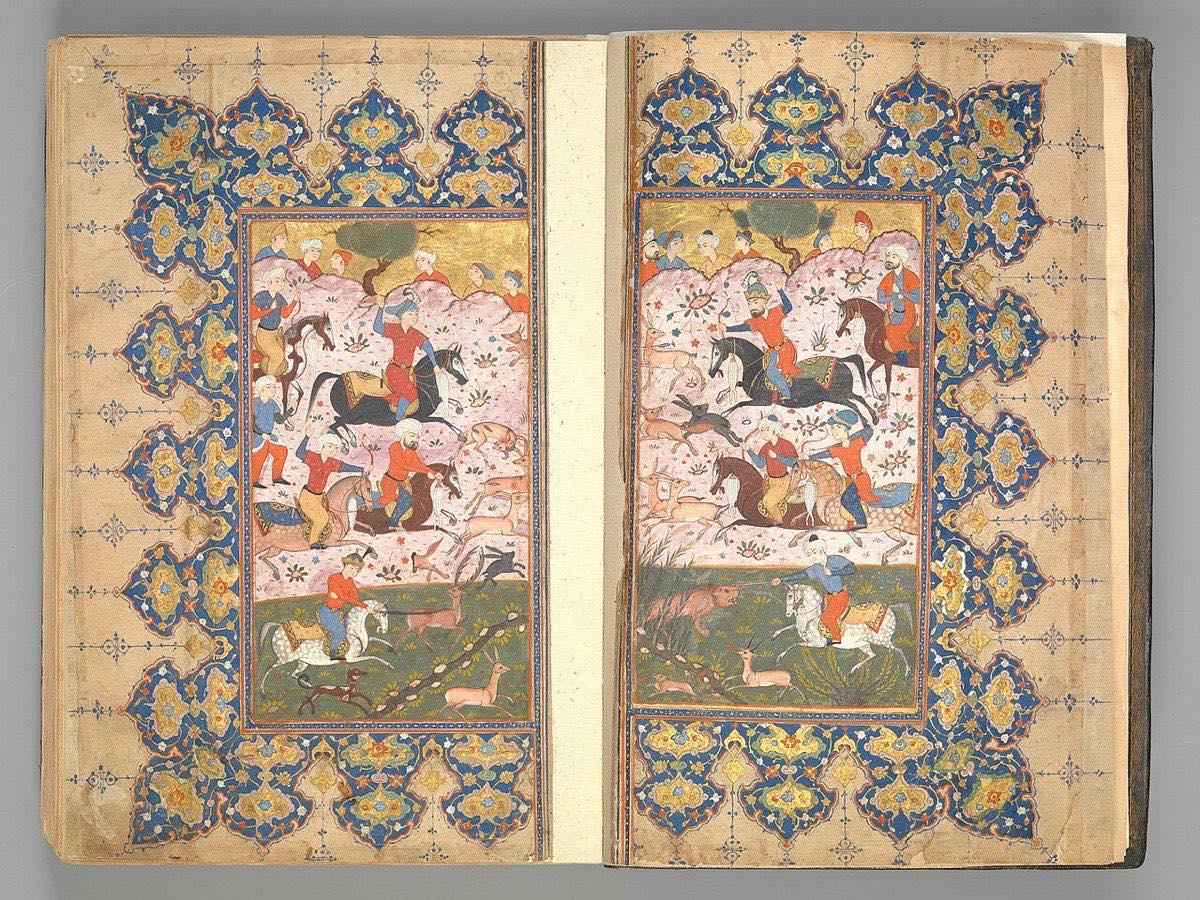
Rumi love poems from the Divan-e Shams
Show Thy face, for I desire the orchard and the rose-garden; / Ope Thy lips, for I desire sugar in plenty.
— Divan-e Shams — بنمای رخ که باغ و گلستانم آرزوست / بگشای لب که قند فراوانم آرزوست — tr. R. A. Nicholson (1898), public domain
I was dead, I came alive; I was weeping, I became laughter. The fortune of love arrived, and I became a fortune that lasts.
— Divan-e Shams — مرده بدم زنده شدم، گریه بدم خنده شدم / دولت عشق آمد و من دولت پاینده شدم — literal translation by Delband
Morde budam zende shodam is one of the best-loved Rumi poems in Iran, set to music many times. The Persian plays on doulat, which means both fortune and good luck — love arrives, and the speaker doesn’t just receive good fortune, he becomes it.
Love is the astrolabe of God’s mysteries. / A lover may hanker after this love or that love, / But at the last he is drawn to the KING of Love.
— Masnavi I — عشق اصطرلاب اسرار خداست — tr. E. H. Whinfield (1887), public domain
Famous “Rumi quotes” that aren’t quite Rumi
Most popular English Rumi comes from free, modern “versions” rather than translations. The best known are by the American poet Coleman Barks, who doesn’t read Persian and reworks earlier literal translations by scholars. His versions are beautiful and have introduced millions to Rumi — but they often drop the Islamic and Quranic framework that runs through the originals, a point made by scholars and in Rozina Ali’s 2017 New Yorker essay on the subject. Some lines drift so far that they can’t be matched to a Persian source at all.
| Popular line | What we found | Fair attribution |
|---|---|---|
| “Out beyond ideas of wrongdoing and rightdoing…” | A loose modern version by Coleman Barks of a Rumi quatrain; the wording is Barks’s | “Rumi, in Coleman Barks’s version” |
| “The wound is the place where the Light enters you” | Not a translation; a condensed paraphrase of a Barks version | “After Rumi” |
| “What you seek is seeking you” | We couldn’t trace it to a specific poem; the Masnavi couplet above expresses a similar idea | Unverified |
| “We carry inside us the wonders we seek outside us” | Closely echoes Sir Thomas Browne’s Religio Medici (1643), an English work | Not Rumi |
How to use Rumi quotes in a relationship
- Write one couplet in Persian script on a card, with a translation underneath. The script itself is a gift.
- Read the Masnavi’s opening reed-song aloud together; ask your partner or their parents how they learned it at school.
- For a wedding reading, pair a Rumi couplet with one of the Hafez love poems — the two poets cover longing and celebration between them.
- Use morde budam zende shodam as a playlist prompt: there are many sung versions to listen to on a date night.
Rumi and Hafez: who to quote when
| Rumi (Mowlana) | Hafez | |
|---|---|---|
| Lived | 1207–1273, died in Konya | c.1315–1390, Shiraz |
| Best-known works | Masnavi, Divan-e Shams | Divan (about 500 ghazals) |
| Love feels like | Ecstasy, dissolving into the beloved | Longing, wit, wine and the beloved’s door |
| Used for | Weddings, reflection, music | Fal e Hafez, Yalda, everyday quoting |
If you’ve ever been asked to “open the Divan” at a family gathering, that was Hafez, not Rumi — the ritual is explained in our guide to fal e Hafez.
A final tip: if you’re quoting Rumi to someone Iranian, quote Mowlana in Persian. Even a single half-line — beshnow in ney, “listen to this reed” — will mean more to them than the most beautiful English paraphrase, because it’s the version they grew up hearing.
Reading Rumi in Persian, even a little
You don’t need fluent Persian to enjoy Rumi in the original. The Masnavi’s metre is steady and musical, and many Iranians learned its opening lines at school, so reading them aloud with a Persian speaker is a natural shared moment. Start with the first couplet, learn what each word means, and listen to a recording by a reciter or a singer. You’ll notice rhymes and repetitions that no translation can carry — and you’ll understand why Iranians often say Rumi sounds better than he reads.
Frequently asked questions
What is Rumi’s most famous love quote?
In Persian, the opening of the Masnavi — “Listen to this reed as it complains; it tells the story of separations” — is the line nearly every Iranian knows. In English, the most-shared lines are often loose modern versions, so check the source before quoting.
Did Rumi write in Persian or Turkish?
Mainly in Persian. He lived his later life in Konya, in today’s Turkey, where his tomb is, but the Masnavi and the Divan-e Shams are Persian works, with some Arabic and occasional Greek and Turkish lines.
Are Coleman Barks’s Rumi poems real?
They’re based on real poems, but they’re free English versions rather than translations. Barks works from other scholars’ literal translations and reshapes them, often removing religious references. Many readers love them; just credit them as Barks’s versions.
Is “what you seek is seeking you” by Rumi?
We couldn’t trace that exact line to a Rumi poem. A genuine Masnavi couplet says no lover seeks union without the beloved also seeking them, which is a similar idea. If you use the short version, “after Rumi” is the honest credit.
Where can I read real Rumi translations for free?
Public-domain translations by E. H. Whinfield (Masnavi, 1887) and R. A. Nicholson (Divan-e Shams selections, 1898) are freely available online, including on Project Gutenberg. Nicholson later produced a complete scholarly Masnavi translation between 1925 and 1940.
Rumi spent a lifetime writing about the longing to find the one you belong with. Delband is a free iPhone dating app for the Persian community — with nearby matches and city chat rooms — for anyone who’d like their own story to start a little closer to home.