7 min read ·
How to Say I Love You in Farsi (and Mean It)
How to say I love you in Farsi: dooset daram vs asheghetam, formal and casual forms, how to reply, pronunciation tips, and when each phrase lands best.
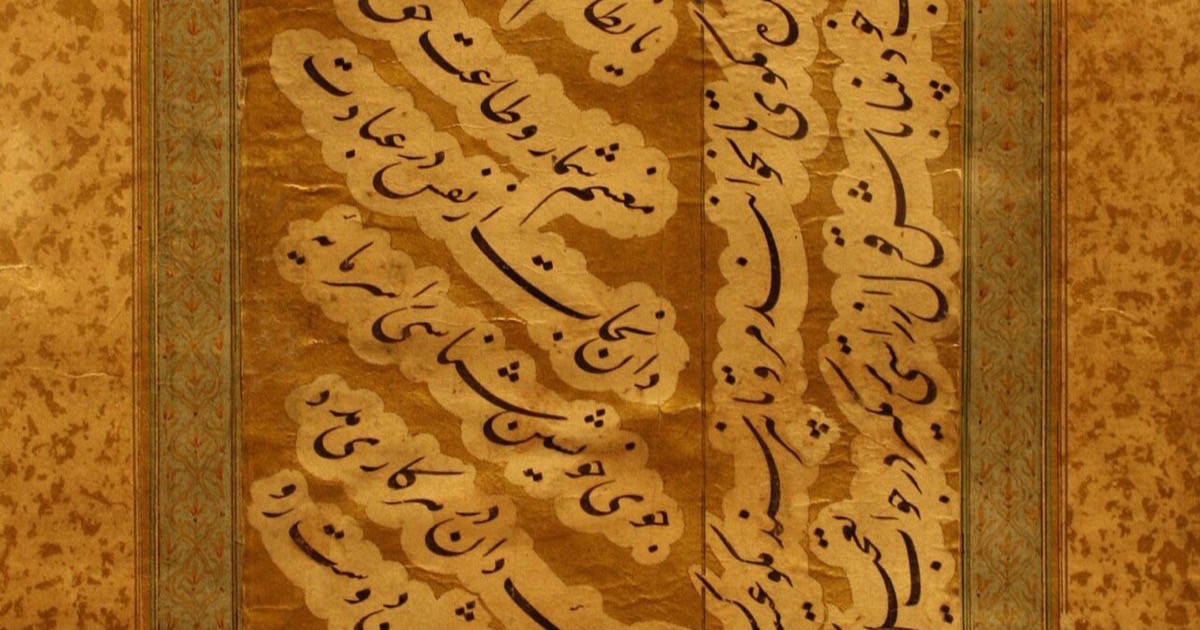
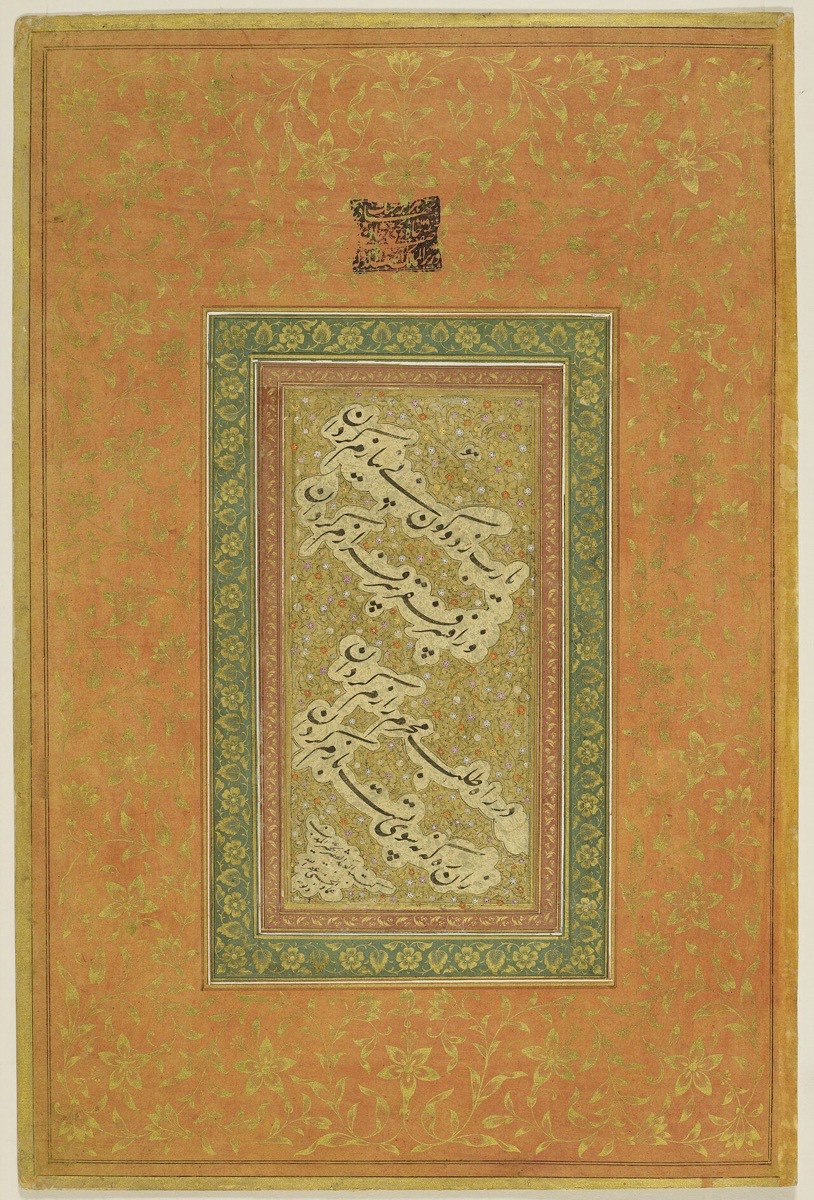
Calligraphy: Mir Emad Hassani, Reza Abbasi Museum — public domain, Wikimedia Commons
By the Delband team
If you want to know how to say I love you in Farsi, the short answer is dooset daram. The longer answer is more interesting: Persian has a whole ladder of ways to say it, from a shy “I like you” to an all-in “I’m in love with you”, and the grammar changes depending on whether you’re whispering it to a partner or saying it to their grandmother. This guide walks through each phrase, how to pronounce it, how to say it back, and when each one fits.
If you’re after the sweet everyday words — azizam, joonam, eshgham — we’ve covered those separately in our guide to Persian words of endearment. This page is only about the big three words, and everything around them.
The standard way: dooset daram
Dooset daram (دوستت دارم) is the everyday, sincere “I love you” in Farsi. Literally it’s “I have you as a friend/beloved” — doost means friend or dear one, the little -et means “you”, and daram means “I have”. Don’t let the word friend fool you: in this construction it means love, and it’s what partners, parents and children say to each other.
Dooset daram
دوستت دارم
“I love you.” The spoken, everyday form — warm, sincere, used with partners and family.
In careful or written Persian it’s pronounced doostat daram. Both are correct; dooset is how most people say it.
Kheili dooset daram
خیلی دوستت دارم
“I love you very much.” Kheili (very) is the simplest way to turn the feeling up.
Manam dooset daram
منم دوستت دارم
“I love you too.” Manam is a contraction of man ham, “me too”.
Shoma ra doost daram
شما را دوست دارم
The formal or plural version. You’ll see it in writing and hear it from older speakers.
Saying “shoma” to a partner can sound oddly formal — or sweetly old-fashioned, depending on the couple.
Stronger: asheghetam and “I’m in love with you”
Persian draws a real line between loving someone and being in love with them. Eshgh (عشق) is passionate love, and an ashegh is a person in love. That’s why asheghetam lands harder than dooset daram — it’s closer to “I’m crazy about you”. Poets have built centuries of verse on that word; you’ll see it all over our pick of Hafez love poems.
Asheghetam
عاشقتم
“I’m in love with you.” Spoken and passionate.
The full form is ashegh-e to hastam (عاشق تو هستم) — same meaning, a little more deliberate.
Divooneh-tam
دیوونهتم
“I’m crazy about you.” Playful, intense, very colloquial.
Bishtar az joonam dooset daram
بیشتر از جونم دوستت دارم
“I love you more than my life.” Big, dramatic, and completely normal in Persian.
Ta abad dooset daram
تا ابد دوستت دارم
“I’ll love you forever.” Ta abad means “until eternity”.
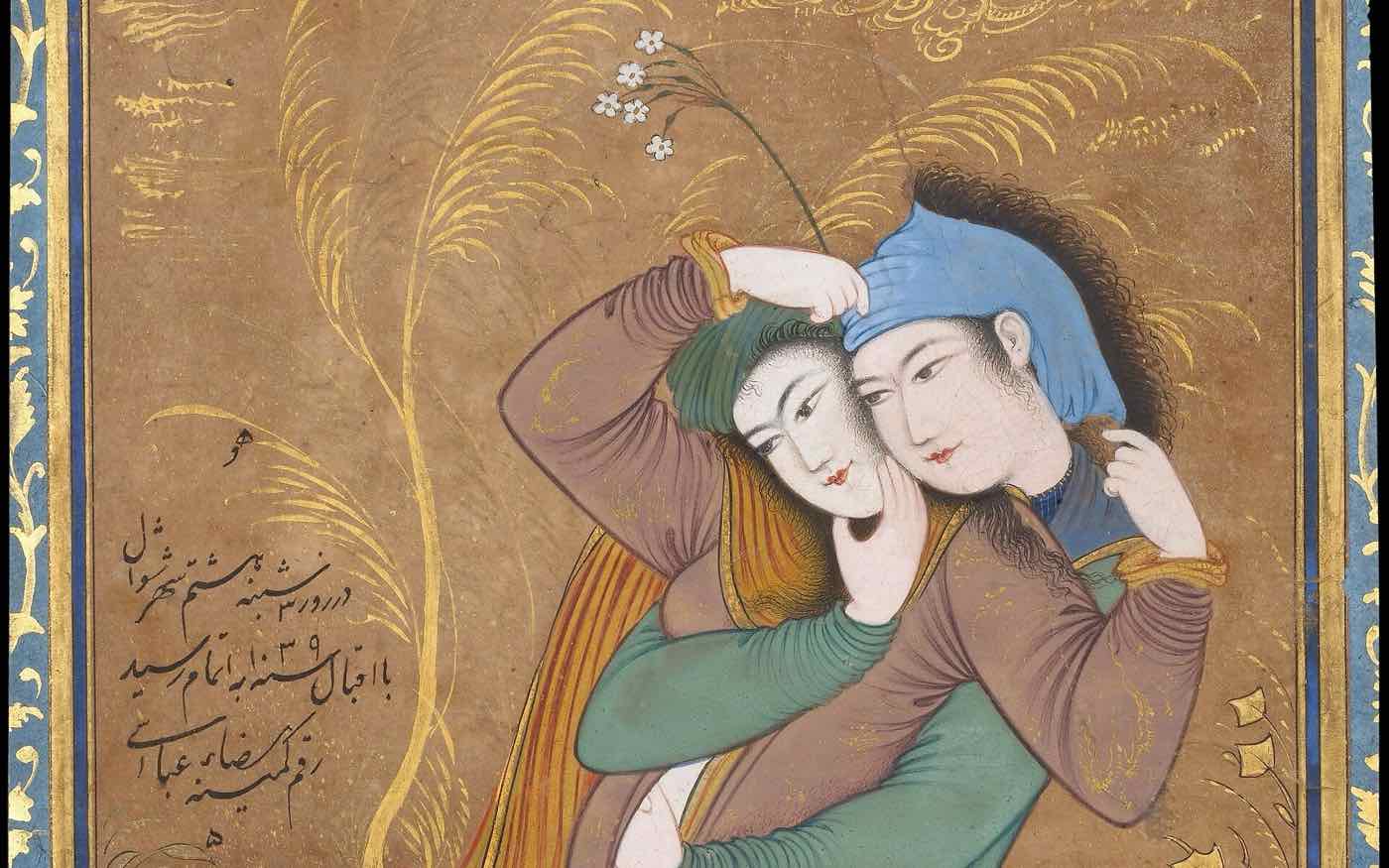
Before “I love you”: how to say “I like you” in Farsi
Most relationships don’t start with dooset daram, and Persian has softer phrases for the early stage. These are useful if you’re dating someone Iranian and want to say something honest without jumping three steps ahead.
| Phrase | Literal meaning | When it fits |
|---|---|---|
| Azat khosham miad (ازت خوشم میاد) | “I get pleasure from you” | Early on — “I like you” |
| Behet alagheh daram (بهت علاقه دارم) | “I have affection for you” | You’re getting serious |
| Dooset daram (دوستت دارم) | “I hold you dear” | You’re in a relationship |
| Asheghetam (عاشقتم) | “I’m your lover” | You’re fully, passionately in |
Be aware that dooset daram is also how Iranians tell family and close friends they love them, so context matters. Azat khosham miad, on the other hand, is unmistakably about attraction — which is exactly what makes it a good first step. For more lines for that early, playful stage, see our guide to flirting in Farsi.
How to say “I love you too” — and other replies
- Manam dooset daram (منم دوستت دارم) — “I love you too.” The standard answer.
- Manam hamintor (منم همینطور) — “Me too / same here.” Shorter and a bit casual.
- Ghorboonet beram (قربونت برم) — an affectionate “aww, you’re so sweet”, often said back to a parent or grandparent. It’s explained in our endearments guide.
- Fadat sham (فدات شم) — similar warmth, “I’d give anything for you”.
Writing it: script, Finglish and texting
In Persian script, I love you is دوستت دارم, written right to left. In text messages, many Iranians abroad type in Finglish — Farsi in Latin letters — so you’ll see dooset daram, doostet daram, dust daram or even just “d.d.” between couples. There’s no single correct romanization; spell it the way your partner does.
Learn to read the four shapes
دوستت دارم is only five different letters: dāl, vāv, sin, te and alef-re-mim. Copying it by hand is a lovely way to learn them.
Write it once on paper
A handwritten note in Persian script, even a wobbly one, tends to get kept for years.
Ask them to correct you
Asking “did I write it right?” starts a conversation — and almost guarantees a reply in the same language.
Saying it to their family
Families are where Persian affection gets loud. A partner’s mother may tell you she loves you on the second visit; a grandmother may call you her life. You don’t need to match every phrase, but a sincere merci, kheili lotf darid (“thank you, you’re very kind”) and the occasional ghorboonet beram go a long way. If you’re preparing for that first visit, our guide to meeting Persian parents covers the rest.
In Persian, “I love you” isn’t rationed. It’s said at the door, on the phone, and at the end of nearly every call home.
Common mistakes when you’re learning
- Saying asheghetam on a second date. It’s a big word; dooset daram or azat khosham miad will feel more natural early on.
- Dropping the -et. Doost daram on its own means “I like it” (for things, like food) — you need the “you” in there.
- Over-literal translations. Phrases like ghorboonet beram sound dramatic in English but are everyday warmth in Persian.
- Worrying about grammar. Persian speakers are famously generous with learners; the attempt is the romantic part.
When to say it the first time
There’s no fixed rule, but a few cultural patterns help. Many Iranians, especially in families, say dooset daram easily and often — so hearing it from your partner’s mother early on doesn’t mean the same thing as hearing it from your partner. Between a couple, the first dooset daram usually comes once you’re exclusive, and asheghetam a little later, when things feel serious.
If you’re not a native speaker, saying it in Persian for the first time can carry extra weight: it shows you’ve taken the trouble to learn something that matters to them. Some people choose a quiet moment; others send it as a text in Persian script, which gives the other person time to enjoy it. Either way, don’t worry about perfect pronunciation. An accent is part of what makes it memorable, and most Iranians will tell you it was the sweetest thing they’ve heard all year.
Frequently asked questions
How do you say I love you in Farsi?
The standard phrase is dooset daram (دوستت دارم). It’s sincere and used with partners and family. For a stronger, more passionate version, say asheghetam (عاشقتم), meaning “I’m in love with you”. Add kheili — kheili dooset daram — for “I love you very much”.
What is the difference between dooset daram and asheghetam?
Dooset daram means “I love you” and is used for partners, parents and close family. Asheghetam means “I’m in love with you” and is only romantic. It carries more passion and weight, so many couples save it for when the relationship is clearly serious.
How do you say I love you too in Persian?
Say manam dooset daram (منم دوستت دارم), which literally means “I also love you”. A shorter, casual reply is manam hamintor, “me too”. With family, an affectionate ghorboonet beram is also a warm way to answer.
Is dooset daram only romantic?
No. Iranians say dooset daram to parents, children, siblings and very close friends as well as partners. Context makes the meaning clear. If you specifically want to signal romantic attraction early on, azat khosham miad (“I like you”) is the clearer phrase.
How do you say I miss you in Farsi?
Say delam barat tang shodeh (دلم برات تنگ شده), literally “my heart has become tight for you”. It’s one of the most-used phrases in long-distance Persian relationships and family calls alike.
Whether you grew up saying dooset daram or you’re practising it for someone special, the phrase means most when it’s said to the right person. Delband is an iPhone dating app for the Persian community — Iranians and the people who love them — with nearby matches and city chat rooms. It’s free to download, and a good place to find someone worth learning the words for.