7 min read ·
Learn Farsi for Your Partner: A Realistic Plan
Want to learn Farsi for your partner or their family? A realistic 6-month plan, the free and paid resources that actually exist, and the phrases families love.
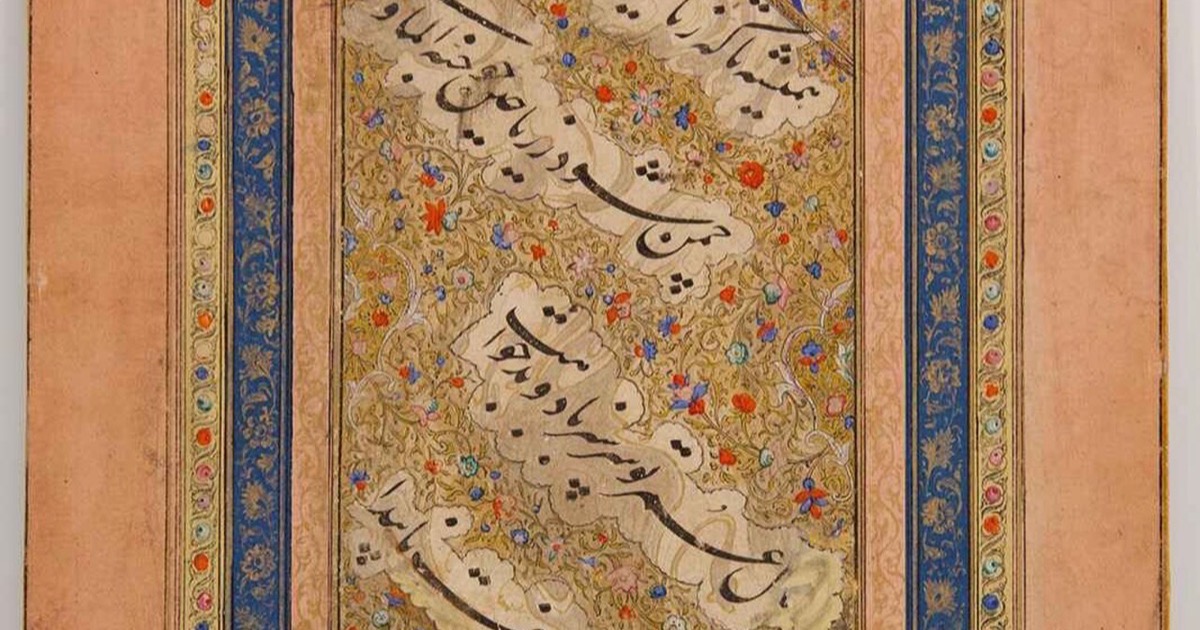
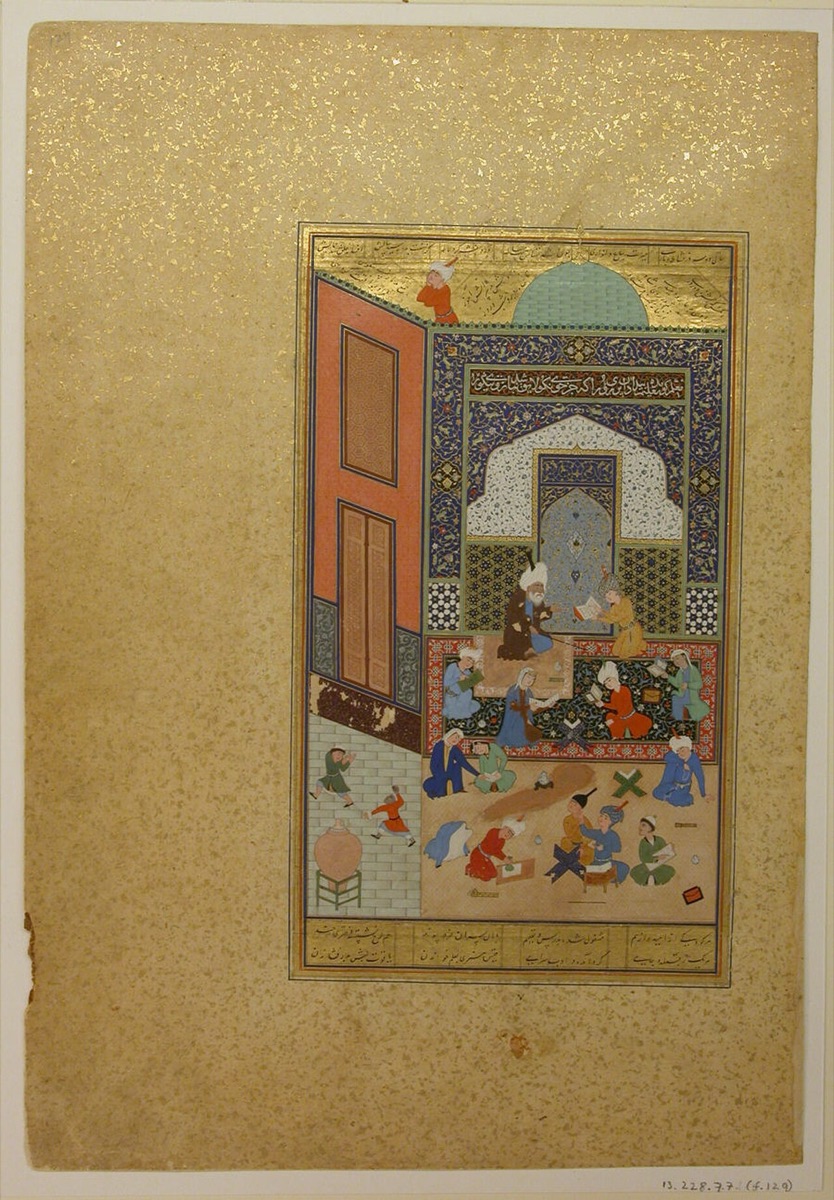
Calligraphy: Mir Emad Hassani, Iran Parliament Library and Museum — public domain, Wikimedia Commons
By the Delband team
If you’re dating someone Iranian, there comes a moment — usually at a family dinner, when everyone switches to Persian and starts laughing — when you decide to learn Farsi. Good news: it’s one of the more approachable languages for English speakers, the grammar is friendlier than its script suggests, and nothing wins over an Iranian family faster than someone trying. Here’s a realistic plan, and the resources that actually exist.
32
Letters in the Persian alphabet
0
Grammatical genders — no he/she, no masculine/feminine nouns
Indo-European
Language family — a distant cousin of English
Farsi or Persian — and which version to learn
Farsi and Persian are the same language; Farsi is its own name for itself, Persian is the usual English name. It’s spoken as Farsi in Iran, Dari in Afghanistan and Tajik in Tajikistan. If your partner’s family is Iranian, you want Iranian Persian — and specifically the spoken, Tehran-style colloquial, because the Persian people speak at home differs noticeably from the Persian in books.
| English | Written / formal | Spoken / everyday |
|---|---|---|
| I love you | Doostat daram | Dooset daram |
| Where are you going? | Koja miravi? | Koja miri? |
| I don’t know | Nemidanam | Nemidoonam |
| Bread / food | Nan | Noon |
A realistic 6-month plan
Weeks 1–3: the alphabet
The script looks hard but it’s logical: 32 letters, written right to left, most with a few joined shapes. Fifteen minutes a day gets most learners reading slowly within a few weeks.
Weeks 3–8: survival phrases for family
Greetings, thank-yous, compliments for the food, and the big taarof phrases. These are the ones you’ll use every visit.
Months 2–4: a structured course
Pick one main resource (see below) and do it consistently, 20–30 minutes a day. Consistency beats intensity.
Months 3–6: listening
Podcasts, Persian music with lyrics, and films with English subtitles. Start noticing the words you’ve learned.
Always: one Persian conversation a week
With your partner, a relative or a tutor. Ten awkward minutes beats an hour on an app.
Resources to learn Farsi (that really exist)
One honest note first: as of November 2026, Duolingo doesn’t offer a Persian course for English speakers, despite years of requests. These are the established alternatives we could verify.
| Resource | Type | Cost | Best for |
|---|---|---|---|
| Persian of Iran Today — University of Texas at Austin | Open textbook with audio | Free online | A structured, university-level course |
| Chai and Conversation | Podcast lessons | Free episodes | Conversational Persian on the go |
| Pimsleur Persian (Farsi) | Audio course | Paid subscription | Speaking and pronunciation |
| Tutor marketplaces such as italki and Preply | One-to-one lessons | Paid, per lesson | Practising conversation |
| Your partner and their family | Real life | Free (plus tea) | Everything a course can’t teach |
Phrases Persian families love to hear
Salam, haletoon chetoreh?
سلام، حالتون چطوره؟
“Hello, how are you?” (polite plural). Use it with every elder at the door.
Kheili khoshmazeh-st
خیلی خوشمزهست
“It’s really delicious.” Say it at every meal, and mean it.
Dastetoon dard nakoneh
دستتون درد نکنه
Literally “may your hand not hurt” — “thank you for your effort”, especially for food.
Ghorboon-e dastetoon
قربون دستتون
“Thank you so much” (literally “may I be a sacrifice for your hand”). The warm reply to a gift or favour.
Khasteh nabashid
خسته نباشید
“May you not be tired.” Said to anyone who’s been working — the host, the cook, the driver.
Bebakhshid, farsim khoob nist
ببخشید، فارسیم خوب نیست
“Sorry, my Farsi isn’t good.” Expect the answer “Kheili ham khoobeh!” — “It’s very good!”
For the romantic side, we’ve covered how to say I love you in Farsi and the Persian words of endearment you’ll hear. For the ritual politeness behind half of these phrases, read taarof in dating.
How to learn Farsi with your partner (without fighting)
- Agree on a “Persian hour” — one meal a week where you try to speak only Farsi, and they gently help.
- Don’t make them your full-time teacher. Native speakers often can’t explain grammar; use a course for that and your partner for real-life practice.
- Ask them to label things around the house with sticky notes in Persian script.
- Watch Iranian films together with subtitles, and pause to ask what a line really meant.
- Learn one couplet of poetry a month — start with our Hafez love poems. Families will be astonished.
What makes Farsi easier (and harder) than you think
| Easier than expected | Harder than expected |
|---|---|
| No grammatical gender, no articles like “the” | Short vowels usually aren’t written |
| Regular verbs and a fairly simple present tense | Spoken and written forms differ a lot |
| Familiar words: pizza, film, telefon, merci | Sounds like kh and gh take practice |
| Speakers are thrilled you’re trying | Fast family conversation, all at once |
The hardest part for most learners isn’t grammar; it’s the speed of a lively family dinner. That’s normal. Our guide to meeting Persian parents has tips for following along, and for knowing when it’s fine to just smile and eat.
Learning the script: where to start
The Persian alphabet is the Arabic script with four extra letters for sounds Arabic doesn’t have: p (پ), ch (چ), zh (ژ) and g (گ). Most letters change shape slightly depending on whether they come at the start, middle or end of a word, and a handful never join to the letter after them. That sounds like a lot, but once you know the basic shape of each letter, the variations follow a pattern.
Short vowels are usually not written, so a word like دوست could in theory be read several ways; in practice you learn words as wholes, the way English speakers learn that “though” and “tough” are different. Start with words you already know from your partner — names, food, pet names — and the script stops being abstract surprisingly quickly.
- Write your partner’s name and your own in Persian script on day one.
- Learn the letters in groups of similar shapes (ب پ ت ث share one body with different dots).
- Read menus at Persian restaurants and grocery labels — real-world practice that’s rewarded with food.
Finally, set your expectations kindly. You probably won’t follow a fast family dinner in six months, and that’s fine. What families notice is effort: greeting the elders in Persian, thanking the cook properly, laughing at the right moment because you caught one word. Those small signs of respect add up quickly, and many partners say it was the first Persian sentence, not the hundredth, that changed how their family saw them.
One more practical idea: keep a shared note on your phone of new words and phrases you hear at family gatherings, and go through it together afterwards. It turns confusing dinners into lessons, gives your partner a chance to explain family jokes, and slowly builds the vocabulary that actually matters in your relationship.
Frequently asked questions
Is Farsi hard to learn for English speakers?
Moderately. Persian is an Indo-European language with no grammatical gender and fairly regular verbs, which helps. The new script, unwritten short vowels and the gap between written and spoken Persian are the main challenges. Most learners can read simple text within a few weeks.
Can I learn Farsi on Duolingo?
As of November 2026, Duolingo doesn’t offer a Persian course for English speakers. Free alternatives include the University of Texas’s Persian of Iran Today open textbook and the Chai and Conversation podcast; Pimsleur and online tutors are paid options.
What is the difference between Farsi and Persian?
They’re the same language. Farsi is the name in Persian itself; Persian is the standard English name. Varieties include Iranian Farsi, Dari in Afghanistan and Tajik in Tajikistan, which are largely mutually intelligible but differ in accent and vocabulary.
How long does it take to learn Farsi?
With 20–30 minutes a day, many learners can read the script in a few weeks and handle basic family conversation within six months to a year. Fluency takes years, but you don’t need fluency to make your partner’s family very happy.
Should I learn written or spoken Farsi first?
Learn to read the script early, but prioritise spoken, colloquial Persian for conversation. Most textbooks teach the formal written form; ask your partner how each phrase is really said at home.
Learning a partner’s language is one of the most generous things you can do in a relationship. Delband is a free iPhone dating app for the Persian community — Iranians and the people who love them — with nearby matches and city chat rooms where English, Farsi and Finglish all mix freely. A good place to practise.