8 min read ·
Persian Dinner Etiquette: How to Eat Well at an Iranian Table
Persian dinner etiquette from arrival to the last glass of tea: where to sit, how to serve yourself, tahdig, compliments and how to leave without offence.
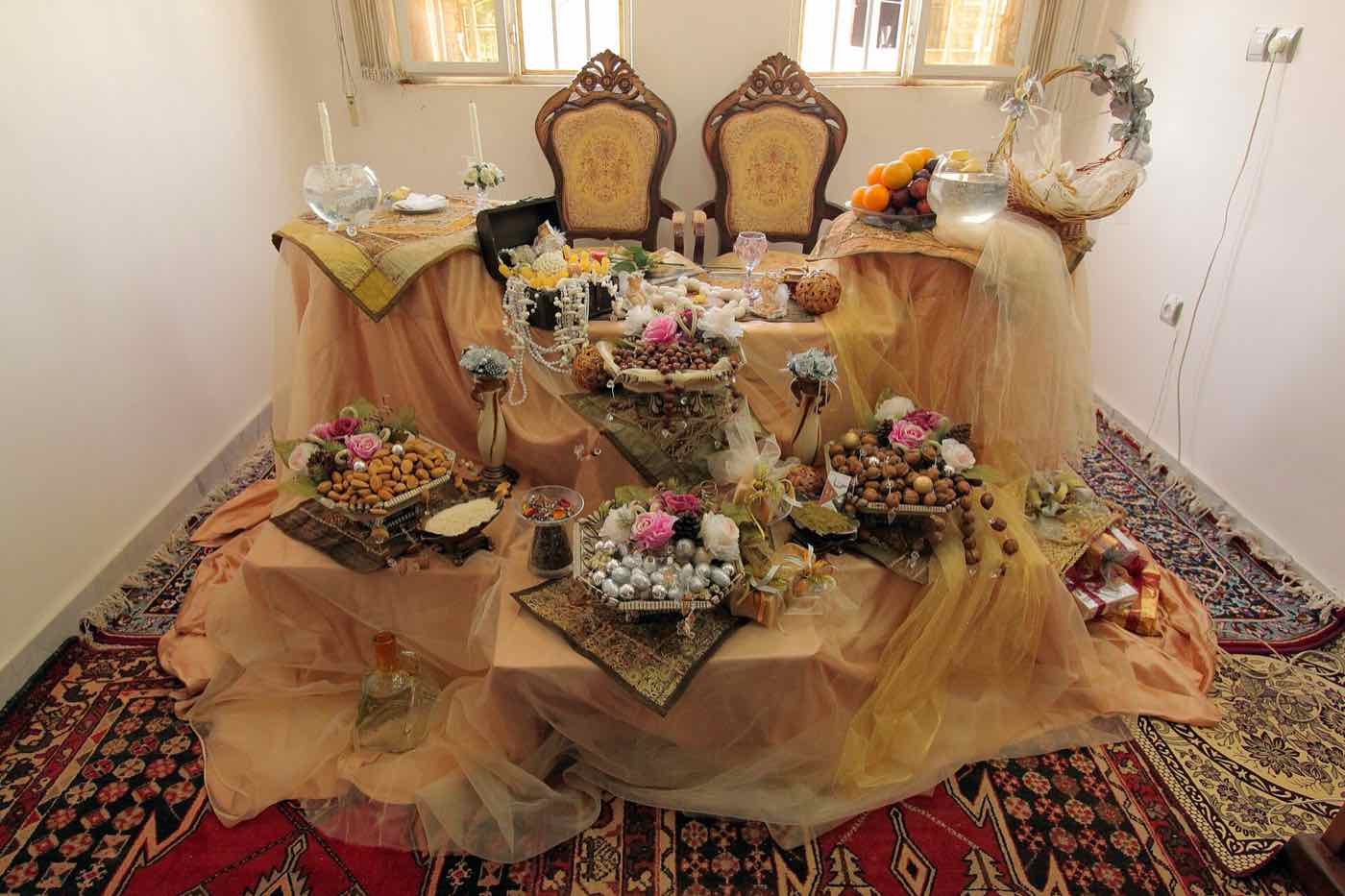
Photo: Mostafameraji, CC BY-SA 4.0, Wikimedia Commons
By the Delband team
Persian dinner etiquette is less about which fork to use and more about how you receive generosity. An Iranian dinner is the host's chance to show care through food, and the guest's job is to accept that care gracefully: to try things, to praise them, to eat a bit more than planned, and to know when and how to stop. Get those few things right and the rest of the evening takes care of itself. Here is how a typical dinner unfolds, from the moment you sit down to the last glass of tea.
Much of what happens at the table is shaped by taarof, the ritual of offering and refusing. We won't repeat it here; if you are new to it, read taarof in dating first, then come back for the practical table manners.
Before the meal: arrival, shoes and seating
- Arrive roughly on time. Iranian hosts often plan the rice around guests, and rice waits for no one.
- Look at the door. If shoes are lined up there, take yours off. Many hosts keep guest slippers.
- Greet the eldest people in the room first, then everyone else individually.
- Wait to be shown where to sit. Honoured guests are often given the best seat, sometimes at the head of the table or nearest the host.
- You will be offered tea, fruit or nuts before dinner. Accept at least something; refusing everything can feel cold.
Some families still eat on a sofreh, a cloth spread on the floor or carpet, especially for big gatherings. If so, sit cross-legged or with your legs tucked to one side, and avoid stretching your feet out toward other people or toward the food. If you can't sit comfortably on the floor, say so; your host would much rather fetch a chair than watch you suffer.
How a Persian dinner is served
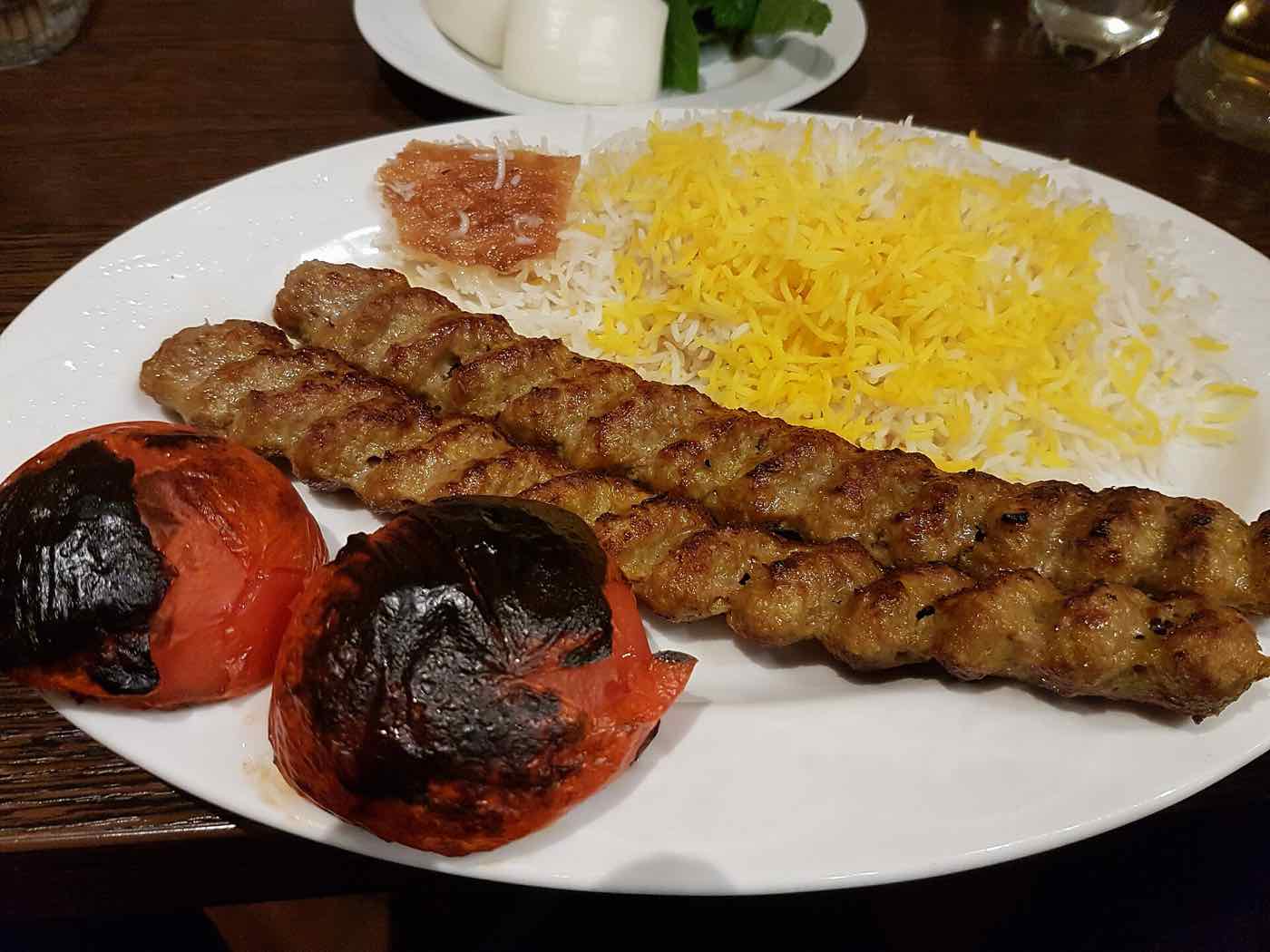
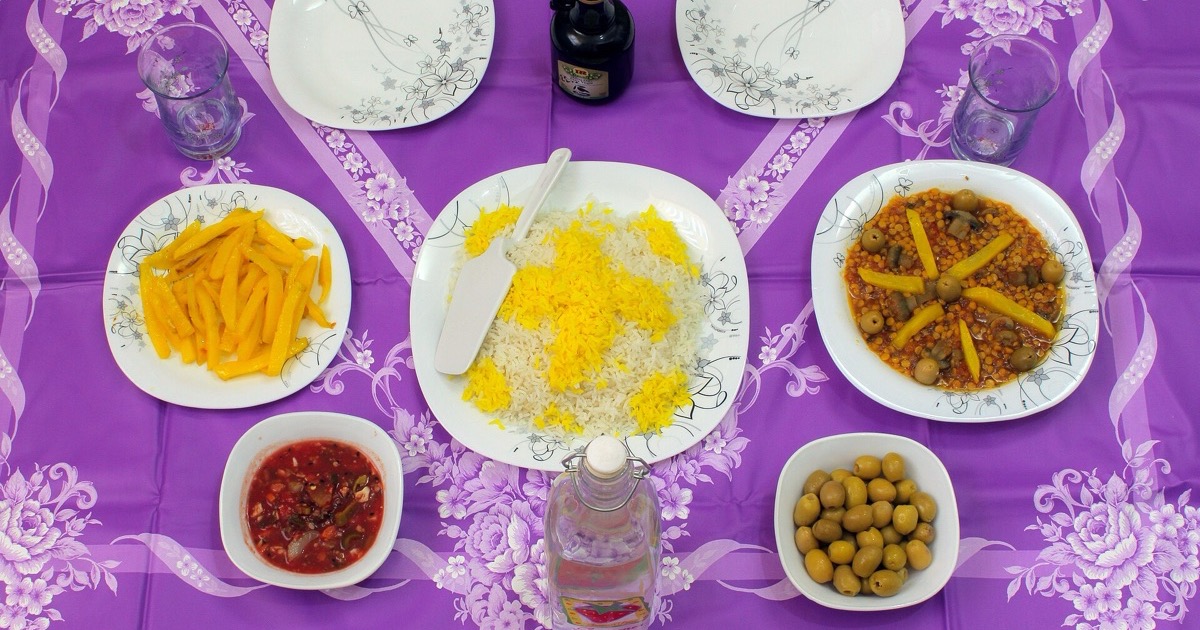
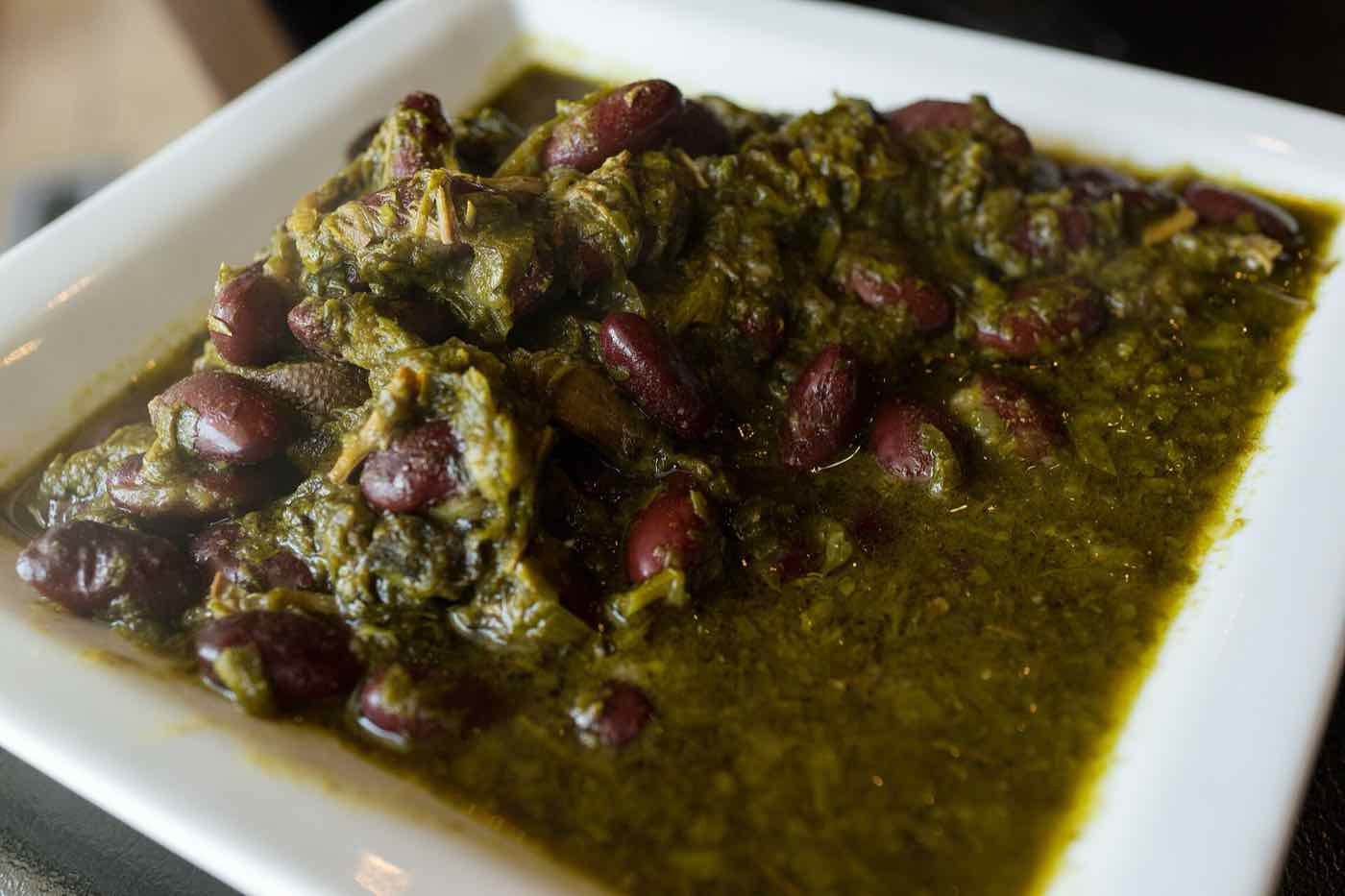
Dinner usually arrives all at once rather than in courses. Expect a platter of rice, one or two stews (khoresh) such as ghormeh sabzi or fesenjan, perhaps kabab or chicken, and an array of sides: yogurt, salad, pickles (torshi), flatbread and a basket of fresh herbs. Everything is shared and placed in the middle. The host will often serve the first plate for you, piled higher than you would choose.
- Spoon and fork, not knife and fork. Iranians typically eat with a spoon in the right hand and a fork in the left, using the fork to push rice onto the spoon. Knives rarely appear.
- Rice first, stew on top or beside it. Spoon the khoresh over a portion of rice rather than drowning the whole plate.
- Herbs are eaten by hand. Tear a little bread, wrap some herbs and a bit of feta, and eat it alongside the meal.
- Take a little of everything. Trying each dish is a compliment to whoever cooked.
- Use your right hand when passing dishes or handing things to people.
Tahdig: the golden crust everyone wants
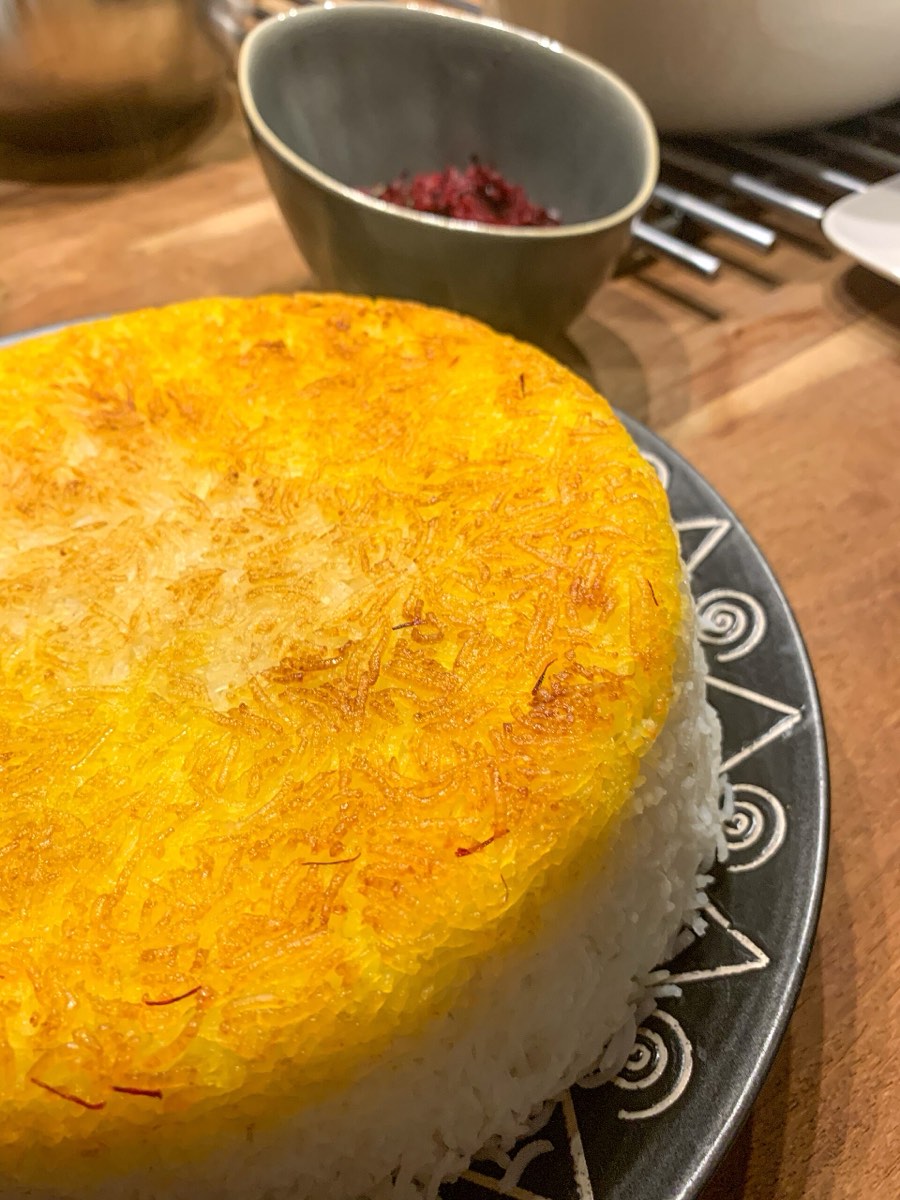
Tahdig, literally 'bottom of the pot', is the crisp layer of rice, potato or bread that forms at the base of the pot. It is the most prized part of the meal and there is never enough of it. If a host offers you a piece, accept; it's a sign of affection. Don't take the biggest piece yourself, and don't take a second piece before everyone has had one. Watching an Iranian family divide the tahdig tells you a lot about who is loved, and who is being polite.
Phrases for the table
Befarmaid sham
بفرمایید شام
'Please, dinner is served.' Your cue to come to the table.
Noosh-e jan
نوش جان
'May it nourish your soul.' The Persian answer to 'enjoy your meal', and the reply when you praise the food.
Sabzi khordan
سبزی خوردن
The basket of fresh herbs (basil, mint, tarragon, radishes) eaten alongside the meal.
Tahdig
تهدیگ
The crispy golden layer from the bottom of the rice pot.
Doogh
دوغ
A savoury, often fizzy yogurt drink with dried mint, served with kabab and rice.
Sir shodam
سیر شدم
'I'm full.' Say it kindly, more than once, with a hand on your heart.
Saying you are full (and being believed)
This is the part guests find hardest. Persian hosts are trained to refill plates, and a polite single 'no thank you' is often heard as modesty. Etiquette guides even disagree on whether you should clear your plate or leave a little. In practice the signal is the combination: slow down, leave a small amount on the plate, put your spoon and fork together, and say clearly and warmly that you are full and that it was delicious. A hand placed on your chest while you say it helps. Then hold your ground, smiling.
Dos and don'ts at a Persian dinner
| Moment | Do | Avoid |
|---|---|---|
| Arriving | Bring sweets or flowers; greet elders first | Arriving empty-handed or very late |
| Serving | Let the host serve you first | Reaching across others for the best pieces |
| Eating | Try every dish; praise specific things | Pushing a dish away untouched |
| Tahdig | Accept when offered | Taking the largest piece or a second before others |
| Finishing | Say clearly that you are full and that it was wonderful | A single quiet 'no' and expecting it to stick |
| After dinner | Accept tea, fruit and sweets | Leaving straight after the meal |
After dinner: tea, fruit and the long goodbye
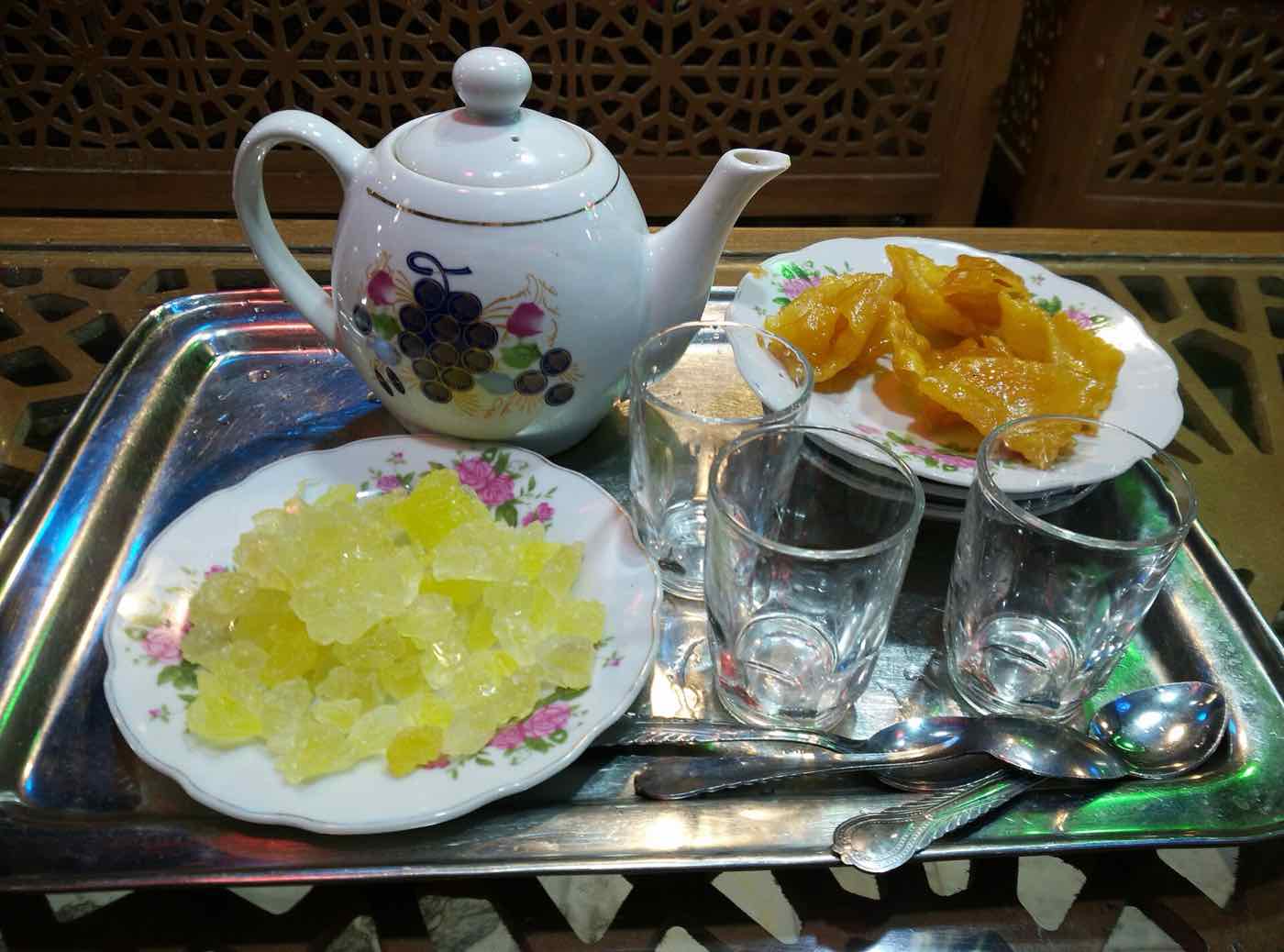
Dinner is not the end of the evening. Tea follows, served in small glasses, often with sugar cubes, dates or nabat (saffron rock candy). Then comes a platter of fruit, which the host may peel and slice for you, and the pastries guests brought. This is when conversation relaxes, and leaving straight after the main course can feel abrupt. Stay for at least one round of tea.
When you do leave, expect the goodbye to take a while: standing up, thanking the cook by name, a few more minutes of conversation by the door, and perhaps a container of leftovers pressed into your hands. Thank whoever cooked with 'dastetoon dard nakone', the phrase covered in our meeting Persian parents guide, and you will leave on the best possible note.
At a Persian table, generosity is the host's language. Appetite, compliments and a second helping are how a guest replies.
Frequently asked questions
Do Iranians eat with a spoon and fork?
Yes. The usual setting is a spoon in the right hand and a fork in the left. The fork helps push rice and stew onto the spoon, which does most of the work. Knives are rarely used at home, since meat is usually tender enough to cut with a spoon.
Should I finish everything on my plate at a Persian dinner?
Advice varies. A clean plate shows you enjoyed the food, but it also invites a refill. If you are genuinely full, leave a small amount, put your cutlery together, and say clearly and warmly that you are full and that the food was delicious.
What is tahdig and how should I take it?
Tahdig is the crisp, golden layer at the bottom of the rice pot, made from rice, potato or bread. It is the most prized part of the meal. Accept a piece when offered, and avoid taking the biggest piece or seconds before everyone else has had some.
How long should I stay after a Persian dinner?
Stay at least for tea and fruit after the meal; leaving straight after the main course can feel abrupt. Goodbyes also take time, so allow ten or fifteen minutes between saying you need to go and actually getting out of the door.
Is it OK to ask for a chair if the meal is on the floor?
Yes. Some families still eat on a sofreh spread on the floor, especially for large gatherings. If sitting on the floor is uncomfortable, it is perfectly polite to mention it. Hosts would much rather bring a chair than have a guest in pain.
Every good dinner invitation starts with meeting the right person. Delband is a dating app built for the Persian community, with matches sorted by distance and city chat rooms where people plan exactly these kinds of evenings. It is free to download on iPhone.