8 min read ·
Persian Hospitality Explained: Tea, Fruit and Taarof
Persian hospitality explained: why hosts insist, how a visit unfolds, the tea, fruit and food rituals, key phrases, and how to be a gracious guest or host.
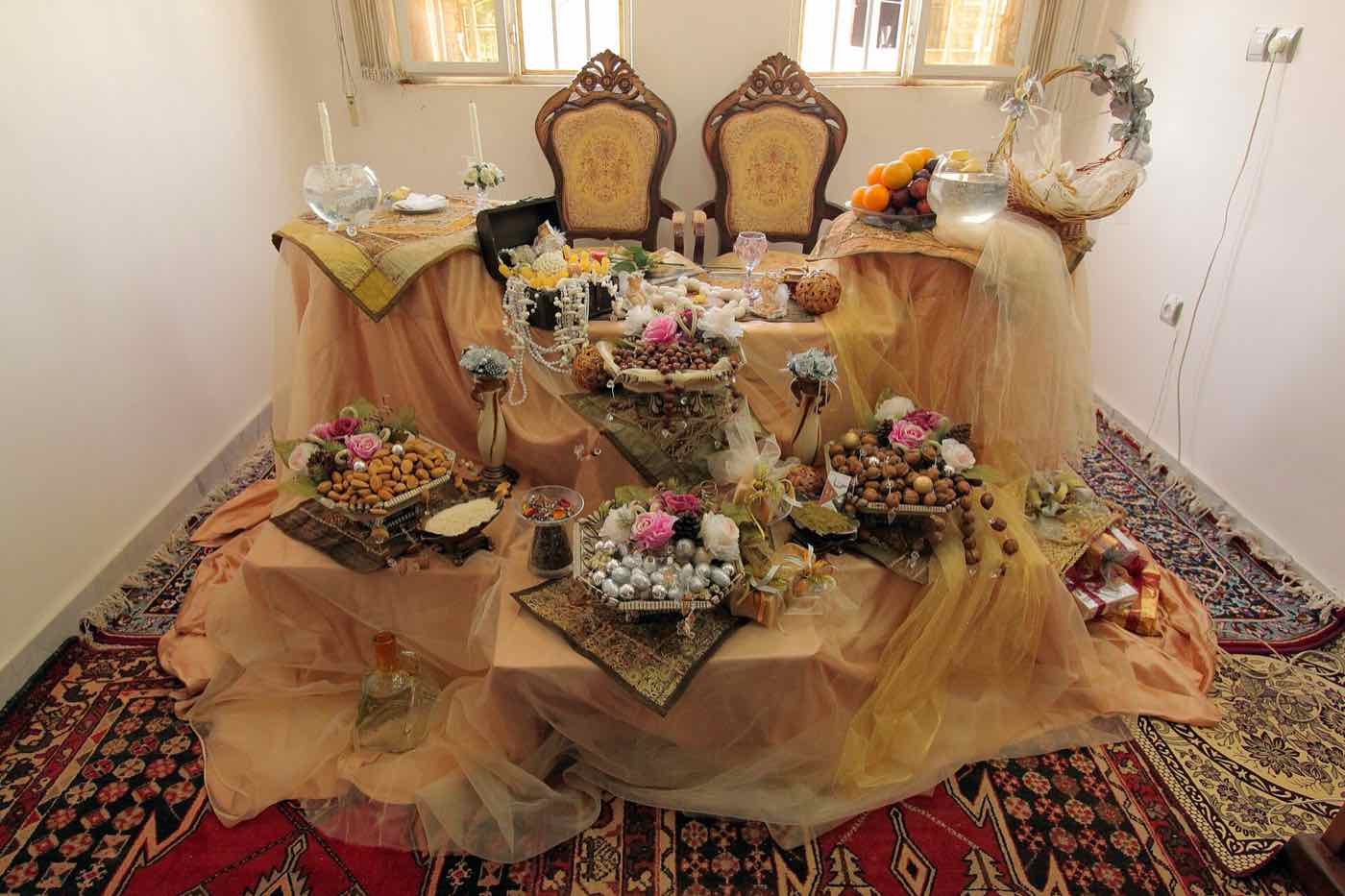
Photo: Hamed Saber, CC BY 2.0, Flickr
By the Delband team
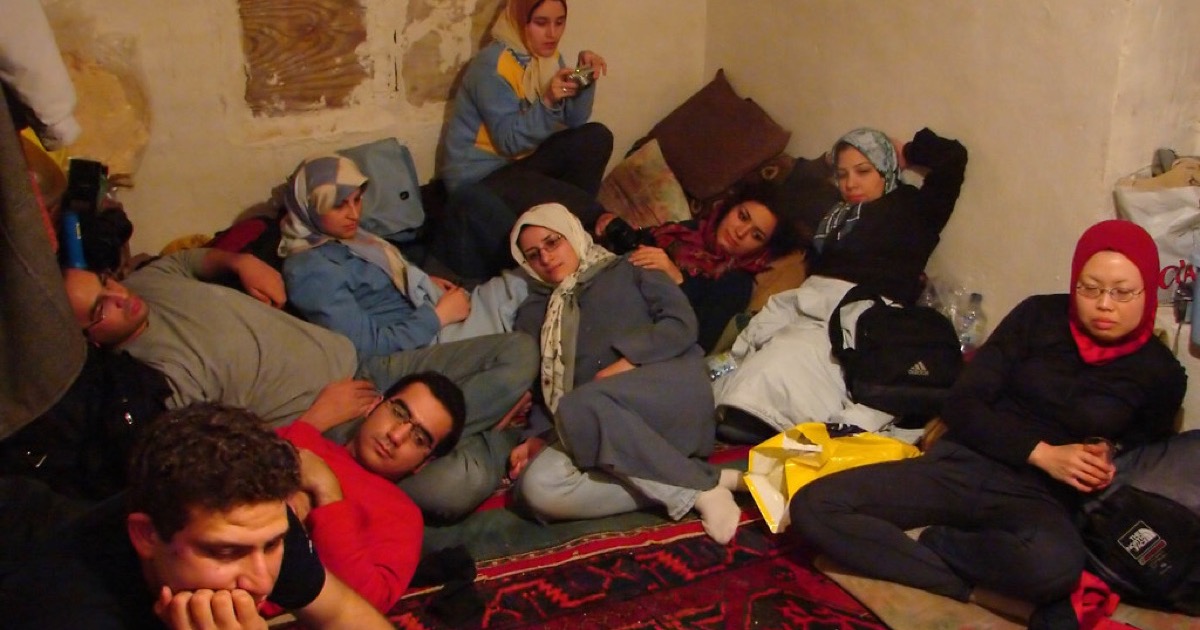
Walk into almost any Iranian home and within minutes you will be holding a glass of tea, looking at a bowl of fruit someone has just peeled for you, and refusing a second plate you will eventually accept. Persian hospitality, mehman-navazi in Farsi, is one of the most famous things about Iranian culture, and also one of the most misunderstood. It isn't just being nice. It is a full social language, with its own grammar, and once you learn it, visits become a pleasure rather than a puzzle.
The guest is a gift
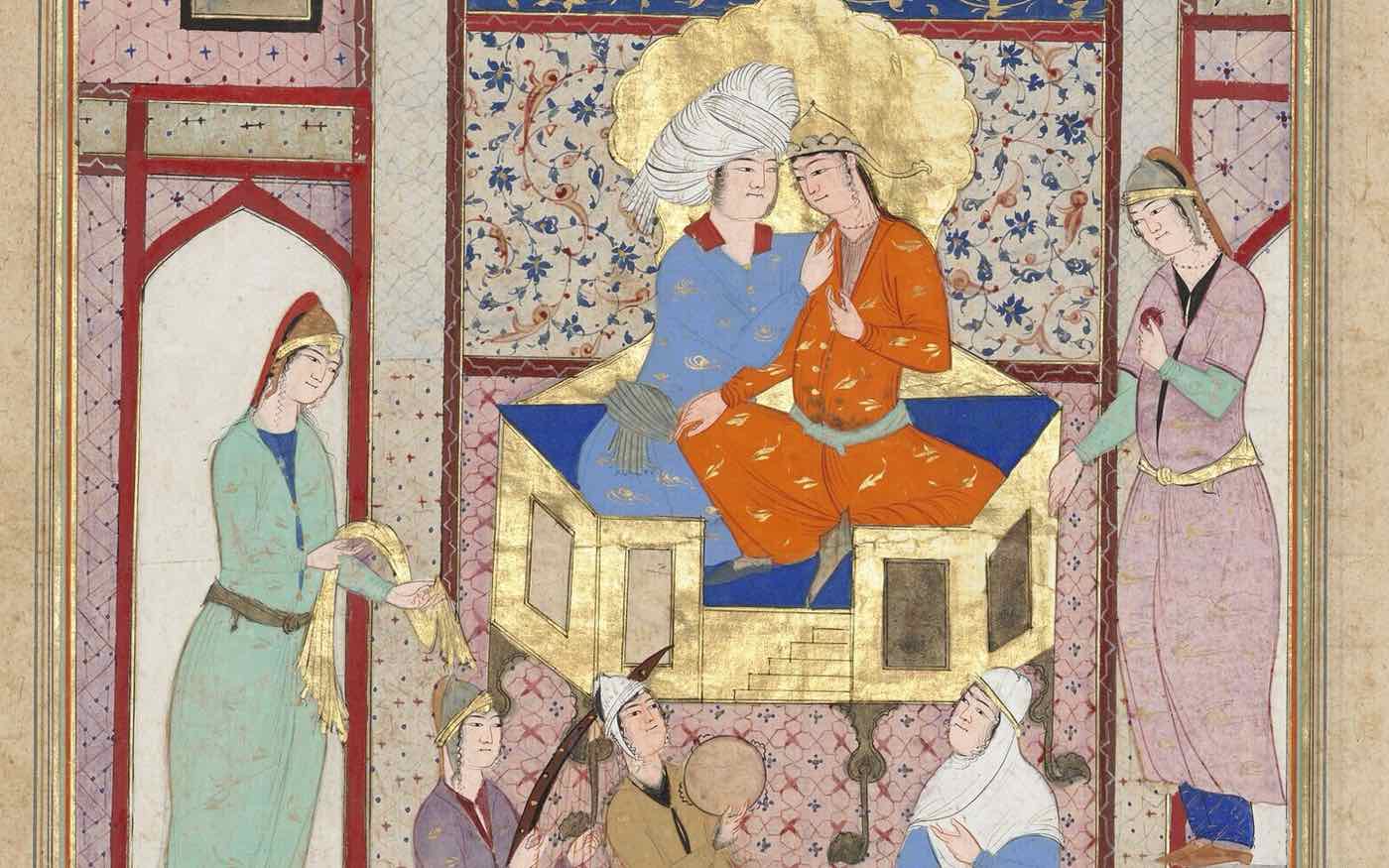
A common Persian saying is “mehman habib-e khodast”: the guest is the beloved of God. People also say it in reply when a guest apologises for the trouble they're causing, as a warm “not at all”. Classical Persian writers on ethics, such as al-Ghazali, wrote at length about the virtue of hosting. The idea is simple: a guest honours the house, and the host's job is to make them feel it.
Mehman
مهمان
Guest.
Mizban
میزبان
Host.
Mehman-navazi
مهماننوازی
Hospitality, literally “caressing the guest”.
Befarmaid
بفرمایید
“Please, go ahead / come in / help yourself.” The all-purpose invitation you will hear a hundred times.
Khosh amadid
خوش آمدید
Welcome.
Ghadametoon roo-ye cheshm
قدمتون روی چشم
“Your footsteps are on my eyes”: you are very welcome here.
Dastetoon dard nakone
دستتون درد نکنه
“May your hands not hurt”: thank you for your effort. The guest's most useful phrase.
How a typical visit unfolds
Arrival
Shoes usually come off at the door, and slippers may be offered. Greet the eldest person first. Bring something: flowers, pastries or fruit are classic.
Tea first
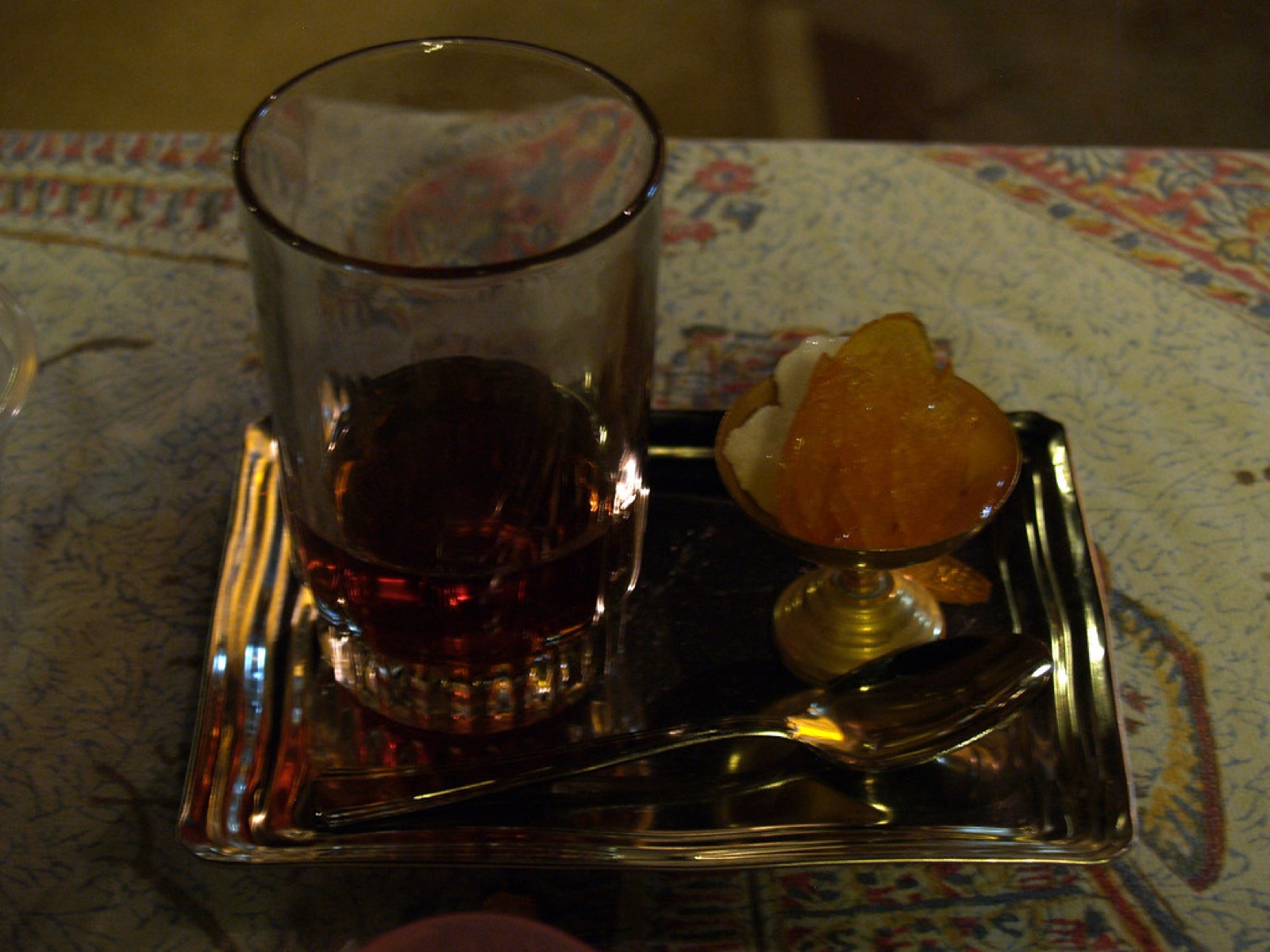
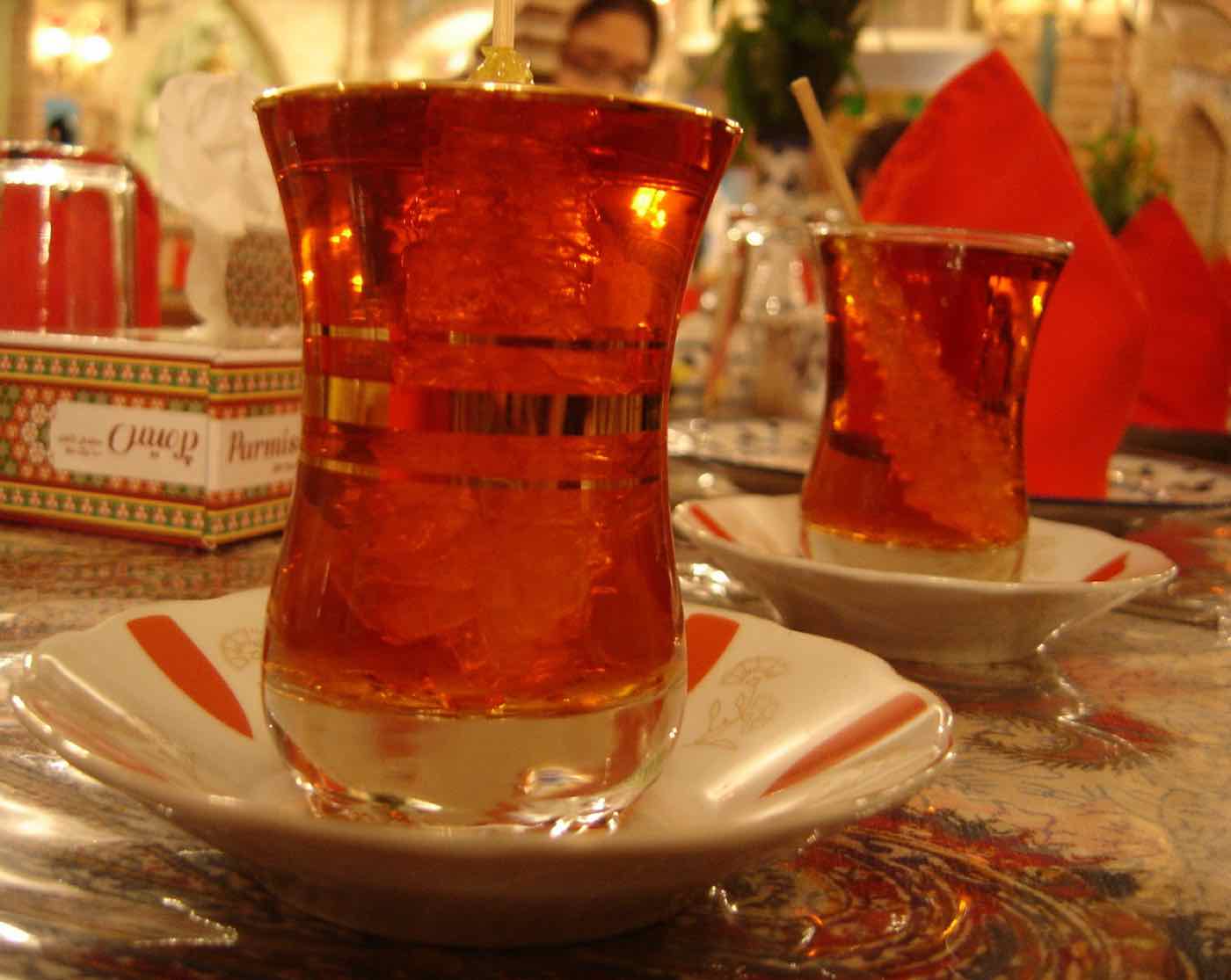
Within minutes, tea arrives in small glasses, often with sugar cubes, nabat or dates. Accept it, even if you only sip.
Fruit and sweets
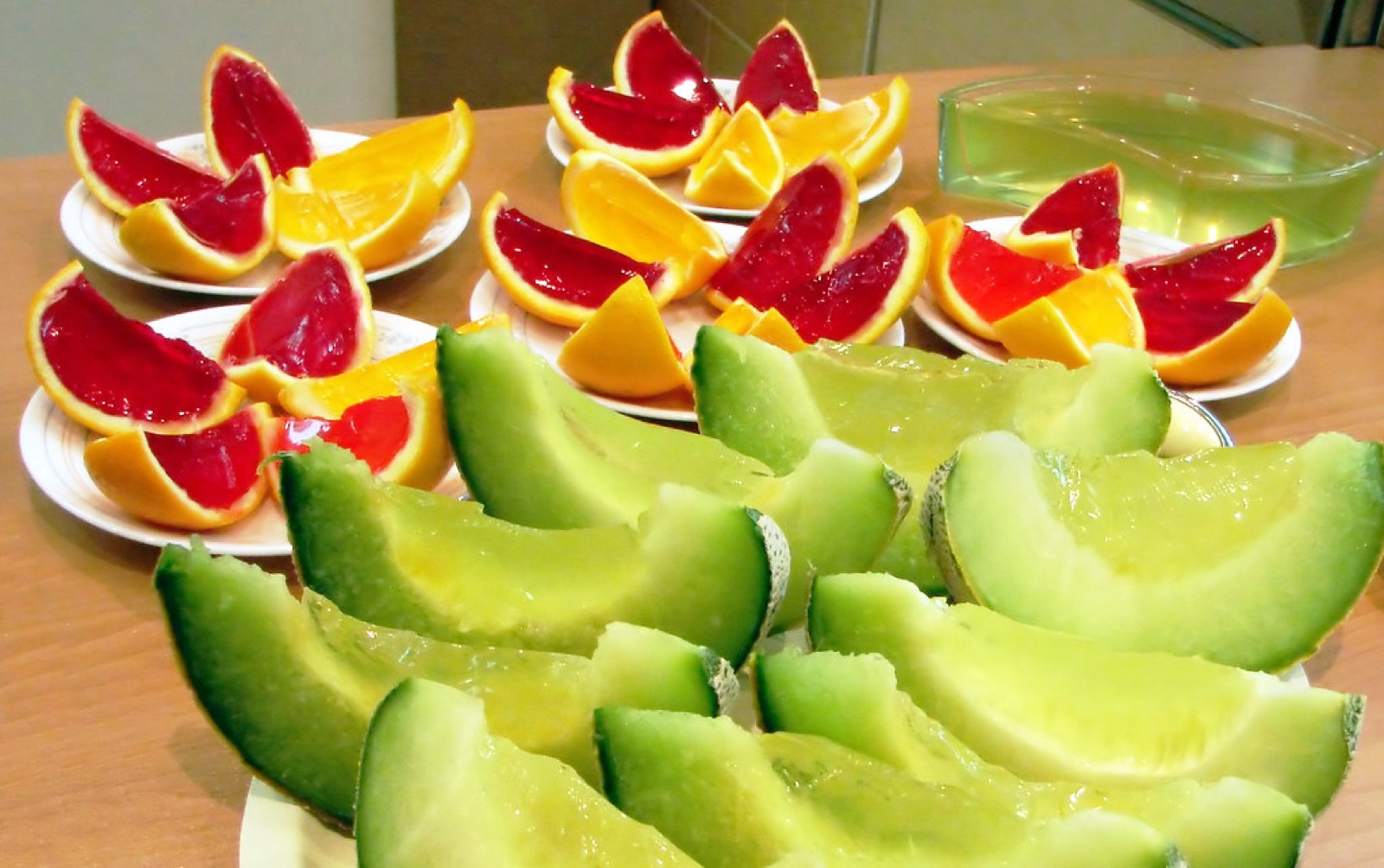
A bowl of fruit appears, usually with a small plate and knife for each guest, plus pastries or ajil (mixed nuts and dried fruit). The host may peel and slice fruit and put it straight on your plate.
The meal
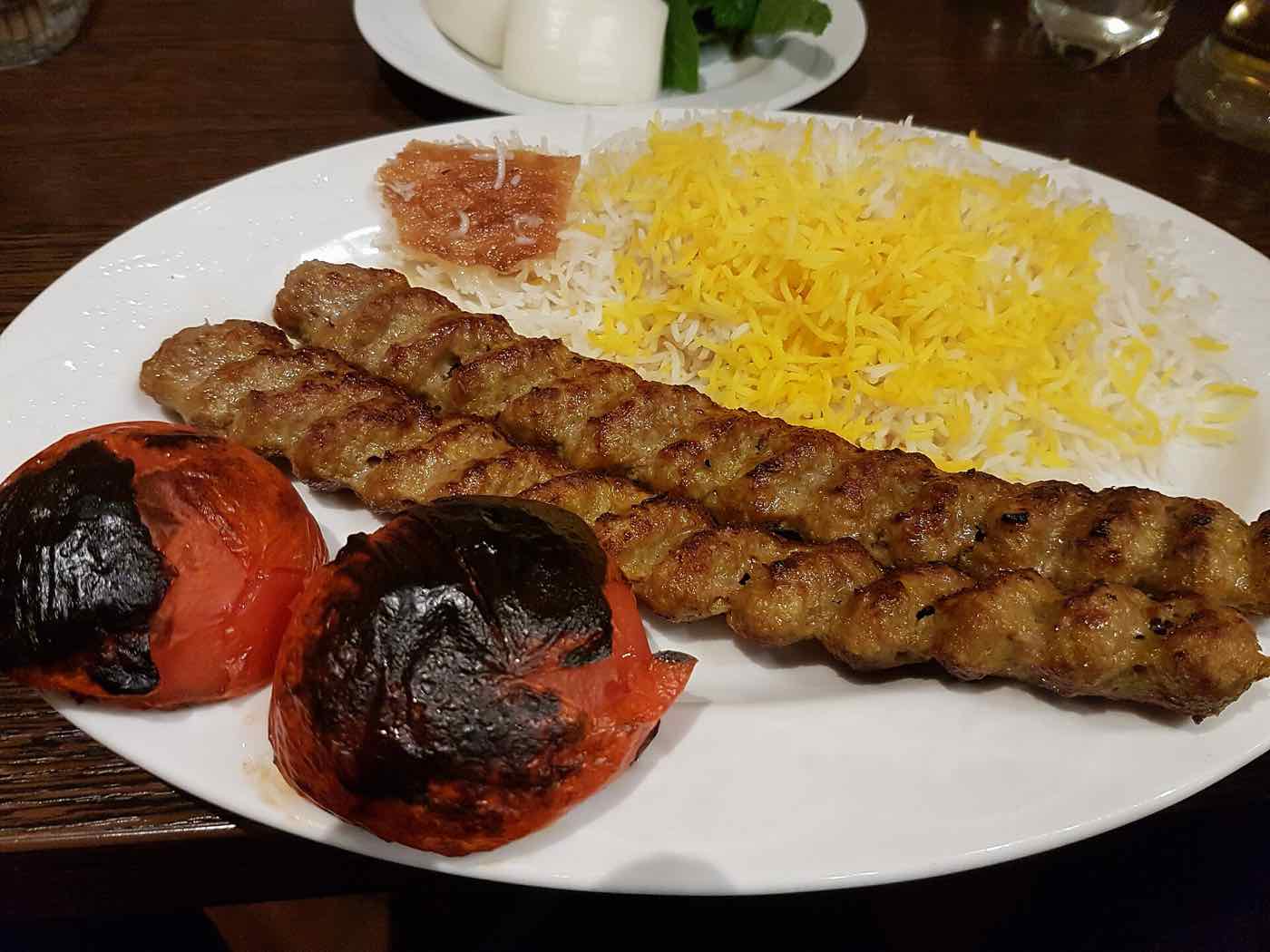
If it's a meal visit, expect far more food than seems necessary. Plates are refilled without asking.
More tea
After the meal, tea again, and more fruit. This is when the best conversations often happen.
The long goodbye
Leaving takes time. Expect to be urged to stay, walked to the door, and possibly sent home with food.
Taarof: the grammar of Persian hospitality
Taarof is the ritual politeness that runs through every visit: hosts insist, guests refuse, hosts insist again. The rule of thumb is to decline once, then accept when the offer is repeated. Hosts, meanwhile, are expected not to take a first “no” at face value. It sounds exhausting, but it is mostly a way of making sure nobody feels like a burden. We've written a full guide to taarof in dating with the phrases and how to read them.
Persian hospitality do's and don'ts
| Do | Don't | |
|---|---|---|
| Arriving | Bring flowers, pastries or fruit | Arrive empty-handed (“dast-e khali”) |
| Shoes | Follow the household; take them off if others have | Walk onto the carpets in outdoor shoes |
| Tea and food | Accept the second offer; try every dish | Refuse everything, or clear your plate too fast if you're full |
| Compliments | Praise the food and thank the cook by name | Overpraise an object in the house: the host may insist you take it |
| Paying | At a restaurant, offer sincerely to pay | Treat the first refusal of your offer as final |
| Leaving | Thank everyone and say a proper goodbye | Slip out unnoticed |
Hosting the Persian way
If you are the host, the principles reverse. Offer first and offer again. Keep glasses full. Put food on your guest's plate rather than waiting for them to ask. Seat the eldest guest in the best place. And when they leave, walk them to the door and wait until they're out of sight. In the diaspora, the details often adapt, but the instinct stays the same: a guest should never have to ask for anything.
For specifics on food, see our guide to Persian dinner etiquette, and if you're the one visiting, our list of gifts to bring to a Persian home.
Hospitality on a date
Persian hospitality shows up in dating too. The tussle over the bill is pure taarof, and many Iranians will want to host you, feed you or send you home with something early on. It's generous, and it's also a way of showing interest. Accept graciously, reciprocate when you can, and if you're the host, don't be surprised if your date insists on bringing something. Our first date ideas include a few that let you both play host.
Hospitality in the diaspora
Outside Iran, Persian hospitality adapts but rarely fades. Homes in Los Angeles, Toronto or London may have smaller living rooms and busier schedules, yet the tea still arrives within minutes and the fruit bowl is still refilled. Restaurants become an extension of the home: you will often see a table of Iranians arguing politely over who pays, a ritual just as important as the meal. Many diaspora families also keep open-house traditions around Nowruz, when relatives and friends visit one another over the holiday, and Yalda, the longest night of the year, when families gather late over pomegranates, nuts and poetry. For second-generation Iranians, hosting can be a way of keeping a link to their parents' culture, and many say it is the tradition they most want to pass on.
For anyone new to it, the main lesson is that the generosity is sincere, even when it is wrapped in ritual. Accept the tea, take the second helping, and when it's your turn, return the favour. That is how friendships, and relationships, are built in Persian culture: one visit, one glass of tea and one overloaded plate at a time.
Frequently asked questions
Why is Persian hospitality so famous?
Because it is taken seriously as a social value. Guests are treated with great honour, hosts offer food and tea generously and repeatedly, and the ritual politeness of taarof shapes every exchange. Visitors to Iran and Iranian homes abroad often describe it as unforgettable.
What does mehman habib-e khodast mean?
It means “the guest is the beloved of God”. It is a common saying expressing how highly guests are valued, and is also said to reassure a guest who apologises for causing trouble.
What should I bring to an Iranian home?
Flowers, a box of pastries from a Persian bakery, good chocolates or a bowl of fruit are all classic choices. Avoid arriving empty-handed. If you're unsure, ask your partner what the host likes.
How do I refuse food politely in a Persian home?
Refuse warmly and give a reason, like being full because everything was delicious. Expect to be offered again; by the third time, a sincere refusal is usually accepted. Leaving a little food on your plate also signals you're done.
Is taarof the same as hospitality?
Not exactly. Hospitality is the value of honouring guests; taarof is the ritual politeness used to express it, such as insisting, refusing and insisting again. Taarof also appears outside the home, for instance when paying at shops or restaurants.
Hospitality starts with an invitation, and every invitation starts with meeting someone. Delband is a free iPhone dating app for the Persian community, with nearby matches and city chat rooms, for people who already know how to say “befarmaid”.