8 min read ·
Sofreh Aghd Items: What Every Piece Means (Full List)
Every sofreh aghd item and what it means: mirror and candelabras, sugar cones, honey, herbs, coins and bread, plus easy swaps for weddings outside Iran.
By the Delband team
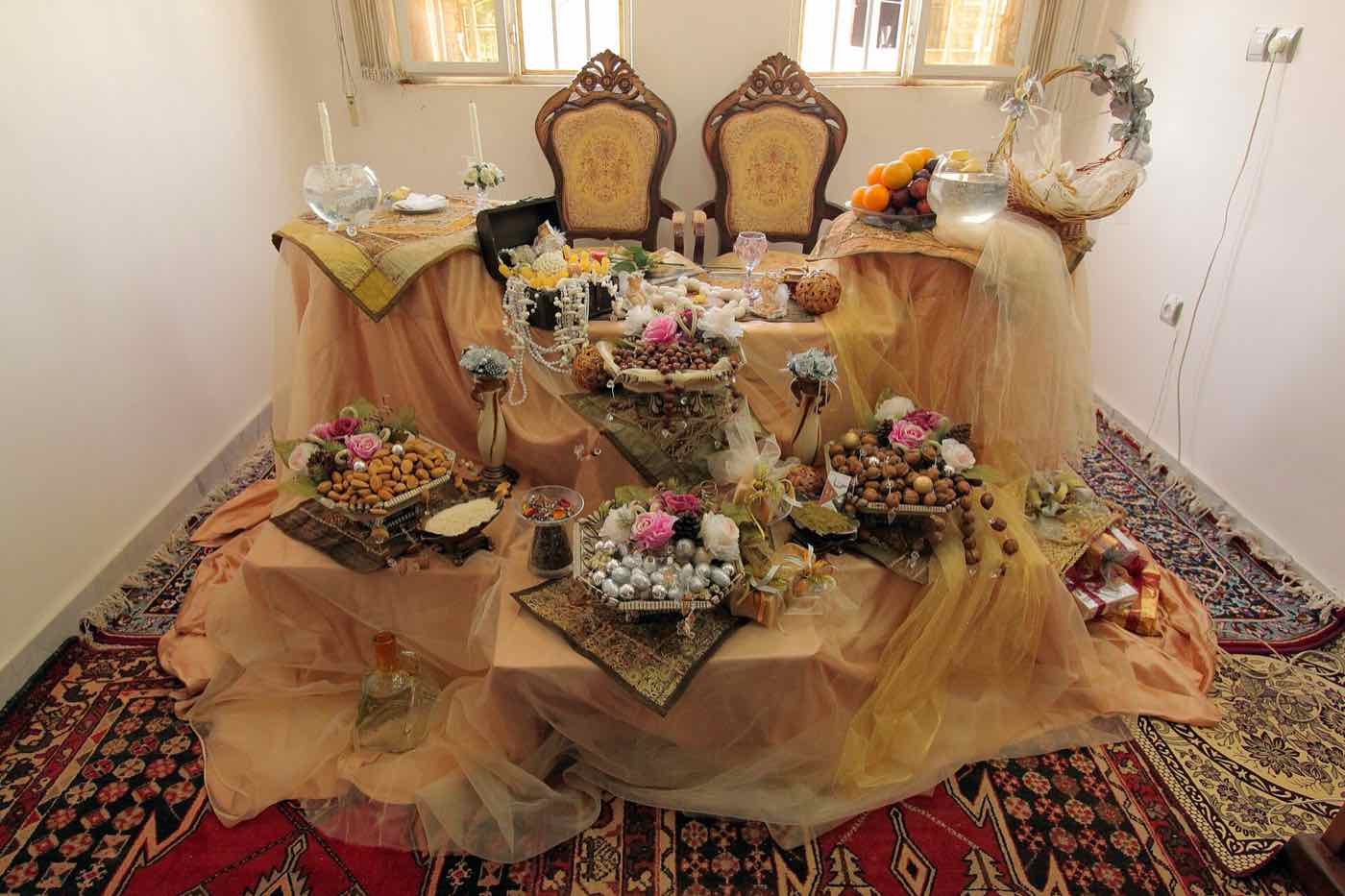
Stand in front of a sofreh aghd for a minute and you start to notice how much is going on. There are candles, a mirror, bread with writing on it, a bowl of honey, coins, eggs, needles, and little dishes of seeds you might not recognise. None of it is random. Every one of the sofreh aghd items is a wish for the couple: for light, sweetness, plenty, protection and a peaceful family. This guide goes item by item, explains what each piece means, and suggests modern swaps for anything that is hard to find outside Iran.
If you want the bigger picture first, our guide to Persian wedding traditions walks through the whole ceremony and party. Here we stay at the spread itself, and go deeper than the usual top ten.
What the sofreh aghd is, and why it faces east
Sofreh simply means a cloth spread, the same word used for the cloth laid out for a meal. The sofreh aghd is the spread laid out for the aghd, the marriage ceremony. Traditionally it was set on the floor; today it is usually built on a low table or platform, with the couple seated at its head. Many families set it facing east, toward the sunrise, so that the couple face the light as they begin married life. Encyclopaedia Iranica describes it as a cloth holding symbolic objects meant to bring good fortune to the bride's married life, and notes that every region has its own customs about exactly what goes on it.
Light and reflection: the mirror and candelabras
Ayeneh-ye bakht
آینه بخت
The “mirror of fate”. The centrepiece, placed at the head of the spread. When the bride sits beside the groom and lifts her veil, the first thing he should see is her reflection in it.
Many families keep the wedding mirror for life and hang it in the couple's home.
Shamdan
شمعدان
A pair of candelabras either side of the mirror, one for each partner. Light and fire stand for a bright future and a household that never goes dark.
Ayeneh-o shamdan
آینه و شمعدان
The set together. In many families the groom's side buys the silver mirror and candelabras before the wedding.
Sweetness: sugar cones, honey, noghl and nabat
Sweetness is the loudest theme on the spread. Persian families wish newlyweds a “sweet life” in so many ways that the sofreh can look like a confectioner's window.
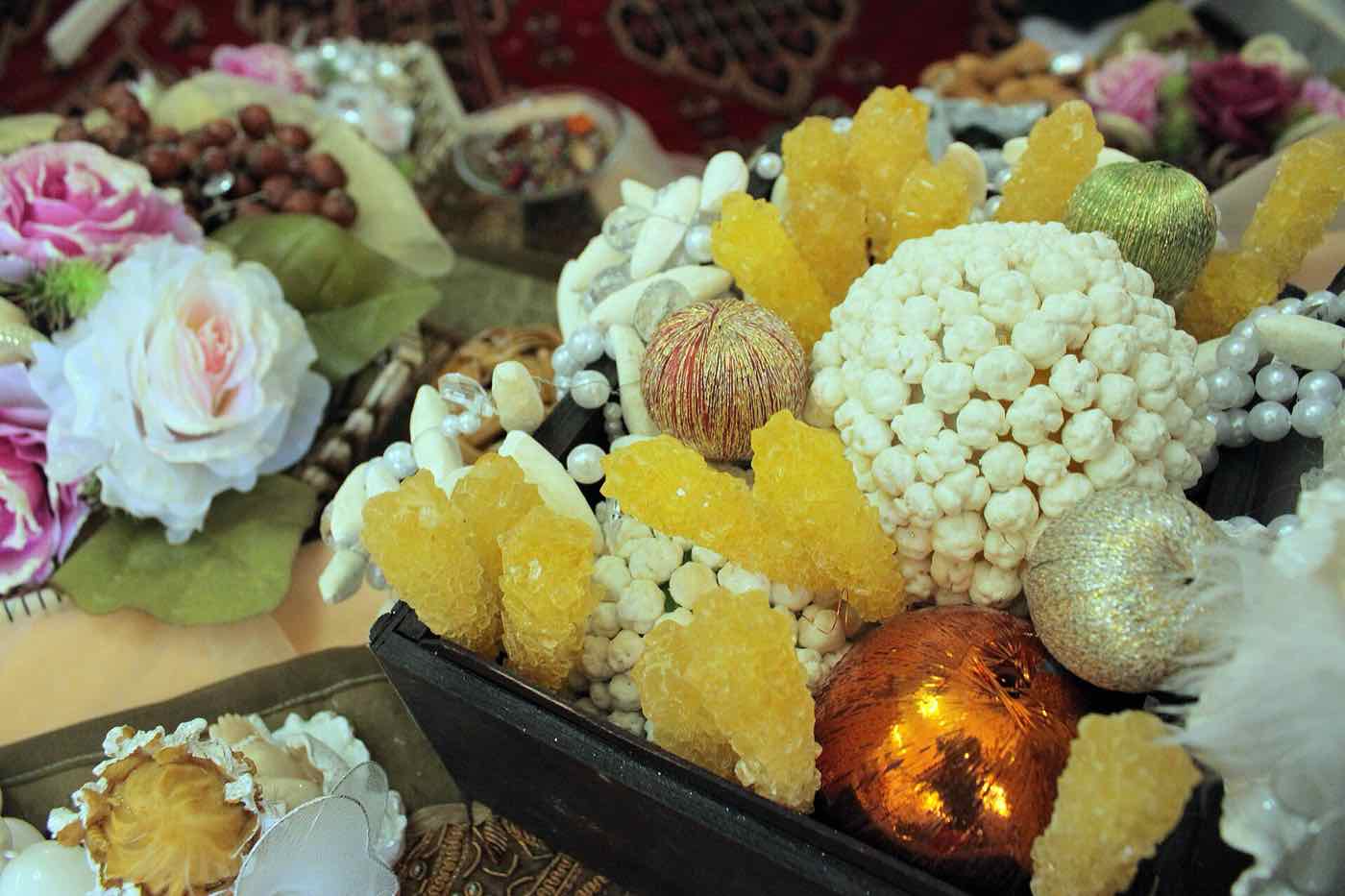
Kalleh ghand
کلهقند
Two cones of hardened sugar. During the ceremony a happily married woman gently rubs them together over a fine cloth held above the couple's heads, so sugar dust falls on the cloth, not on their hair.
Asal
عسل
A bowl of honey. Straight after the vows, the couple each dip a little finger in it and feed each other, so their first act as a married couple is a sweet one.
Noghl
نقل
Sugar-coated almonds or slivers of almond. Guests shower the couple with them after the ceremony, and some are kept for the guests to take home.
Nabat
نبات
Crystallised rock candy, often saffron-yellow, for a life that stays sweet.
Shirini
شیرینی
Pastries such as baklava, toot (a marzipan sweet shaped like a mulberry), nan-e berenji (rice-flour cookies), nan-e badami (almond cookies) and nan-e nokhodchi (chickpea cookies), traditionally shared with guests afterwards.
Abundance: bread, cheese, herbs, eggs, nuts and fruit
Nan-e sangak (or other flatbread)
نان سنگک
A large flatbread decorated with a blessing, often “mobarak bad” (may it be blessed) written in saffron, spices or seeds. It stands for a home that never runs out of food.
Nan-o panir-o sabzi
نان و پنیر و سبزی
Bread, feta-style cheese and fresh herbs: the simplest Persian meal, placed as a wish that the couple will always have the basics. It is often shared with guests after the ceremony.
Tokhm-e morgh
تخممرغ
Eggs, often painted or gilded, for fertility.
Ajil
آجیل
Almonds, walnuts and hazelnuts in their shells, also for fertility and plenty. Walnuts in baskets are one of the most photographed parts of the spread.
Mive
میوه
Fruit, usually pomegranates, apples and grapes. Pomegranates, packed with seeds, are an especially strong symbol of a fruitful future.
Sekkeh
سکه
A bowl of gold or silver coins, for wealth and prosperity.
The seven-herb tray and the sofreh aghd's protective items
Look closely at the small dishes near the front and you will often find a tray of seeds, spices and herbs. Different sources list slightly different contents. The most commonly cited version has seven ingredients: poppy seeds, rice, angelica, salt, nigella seeds, black tea leaves and frankincense. Together they are meant to bless the couple and keep bad luck away.
Esfand
اسپند
Wild rue seeds, burned on hot coals to ward off the evil eye. The smell is unmistakable, and for many Iranians it is the smell of every family celebration.
Kondor
کندر
Frankincense, burned alongside or instead of esfand to purify the room.
Khashkhash
خشخاش
Poppy seeds, part of the herb tray, often read as a charm against bad spells.
Namak
نمک
Salt, which also has a long protective role in Iranian folk custom.
Suzan-o nakh
سوزن و نخ
A needle and coloured thread. During the ceremony a relative makes a few symbolic stitches in a piece of cloth to “sew shut” the lips of gossiping in-laws. Others read it more gently, as two families being stitched together.
Golab
گلاب
Rosewater, to perfume the air and, in the bride's famous delayed answer, the thing she has “gone to fetch”.
Faith, poetry and the cloth over the couple's heads
Ketab
کتاب
A holy book chosen by the family: the Quran, the Avesta, the Bible or the Torah. Many families also add, or choose instead, a book of poetry such as the Divan of Hafez, Rumi's Divan-e Shams or Ferdowsi's Shahnameh.
Janamaz
جانماز
In many Muslim families, an open prayer cloth with a prayer stone (mohr) and prayer beads (tasbih). Non-Muslim and secular families often leave it out or use a piece of termeh, the traditional Iranian woven silk, instead.
Parcheh
پارچه
The fine cloth or scarf held above the couple's heads by female relatives while the sugar cones are rubbed and the needle is stitched.
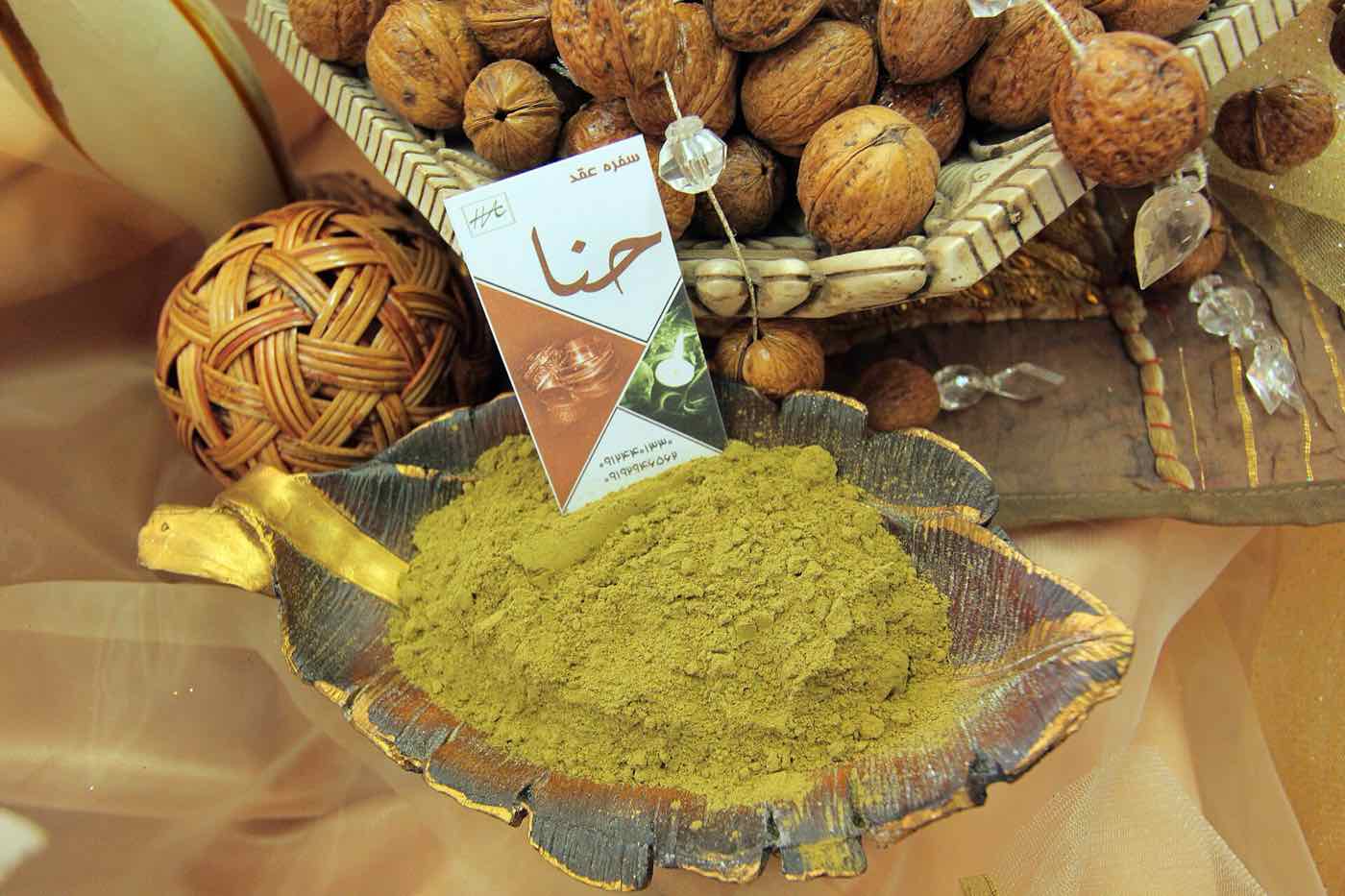
Hana
حنا
A bowl of henna for joy, and a nod to the henna night some families hold before the wedding.
Sofreh aghd checklist: core items and modern swaps
| Item | Wish it carries | If you can't find it |
|---|---|---|
| Mirror and two candelabras | Light, a bright future | Any heirloom or vintage mirror with two candlesticks |
| Two sugar cones | Sweetness showered on the couple | Two large sugar lumps or a block of rock sugar |
| Honey | A sweet start | Any honey; a small glass bowl looks best |
| Decorated flatbread | A home never without food | Lavash or a large round bread with a blessing in saffron |
| Bread, cheese and herbs | The basics of life | Feta and a bunch of mint, basil and tarragon |
| Eggs and nuts | Fertility and abundance | Painted wooden eggs; nuts in their shells |
| Pomegranates, apples, grapes | A fruitful future | Any seasonal fruit; pomegranates are worth seeking out |
| Coins | Prosperity | Gold-coloured coins or a family keepsake coin |
| Esfand or frankincense | Protection from the evil eye | Most Persian grocers stock esfand; burn it outdoors if venues ban smoke |
| Needle and thread | Harmony between families | Any needle with seven colours of thread |
| Holy book or poetry | Blessing and wisdom | The book that means most to the couple |
How to set up a sofreh aghd at home or at a venue
Agree on what matters to you both
Sit down with both families and decide which items are essential. In mixed or interfaith couples, this is the moment to add a symbol from the other partner's tradition too.
Source the heirloom pieces first
The mirror, candelabras and termeh cloth are the hardest to replace. Many are borrowed from a mother or grandmother, or brought from Iran by a relative.
Buy the perishables in the final week
Bread, herbs, cheese and fruit should be fresh. Persian grocery stores in larger cities usually carry noghl, nabat, esfand and often sugar cones.
Lay the spread facing east if you can
Put the mirror and candelabras at the head, the couple's seats in front, and build outward with sweets, then bread and herbs, then fruit and nuts.
Add small cards for non-Iranian guests
A one-line English explanation next to each item turns the sofreh into the most popular corner of the room.
If you're still at the earlier stage, our guides to khastegari and the mehrieh cover what happens before anyone starts shopping for sugar cones, and aghd vs aroosi explains how the ceremony fits with the party.
Frequently asked questions
What items are on a traditional sofreh aghd?
The core items are a mirror with two candelabras, two sugar cones, honey, decorated flatbread, bread with cheese and herbs, decorated eggs, nuts, fruit such as pomegranates, coins, esfand or frankincense, a needle and thread, sweets like noghl and nabat, and a holy book or book of poetry. Families add regional and personal items on top.
Why is there a mirror on the sofreh aghd?
The mirror, called the mirror of fate, stands for light and a clear future. Traditionally the bride enters veiled, sits beside the groom and lifts the veil, and the first thing the groom sees is her reflection in the mirror. The two candelabras beside it represent the two partners.
Who rubs the sugar cones at a Persian wedding?
Usually a happily married woman from one of the families, while other female relatives hold a fine cloth above the couple. The idea is to pass on the luck of a good marriage. Today many couples simply choose a close relative or friend they love, married or not.
Does the sofreh aghd have to face east?
It is a common tradition, linked to facing the sunrise and the light, but it is not compulsory. At venues with fixed layouts, families often prioritise good light and a clear view for guests over the compass.
Can a non-Muslim or interfaith couple have a sofreh aghd?
Yes. The sofreh is a cultural tradition shared by Iranian Muslim, Jewish, Christian, Zoroastrian, Bahá'í and secular families. Couples choose their own holy book or a book of poetry, and many add a symbol from the other partner's culture.
Every sofreh aghd starts long before the shopping list, with two people who meet and decide they want a life together. Delband is a free iPhone dating app for the Persian community, with nearby matches and city chat rooms, made for people who would one day like to sit in front of a mirror like this one.