8 min read ·
Persian Wedding Gift Etiquette: What to Give and When
Persian wedding gift etiquette: gold coins and jewellery at the aghd, cash at the aroosi, shabash, what to write on the card in Farsi, and what to avoid.
Photo: tsuihin - TimoStudios, CC BY-SA 2.0, Flickr
By the Delband team
You have the invitation, the outfit and a plan for the dancing. Now the practical question: what is the right Persian wedding gift? The answer depends on who you are to the couple, which event you're attending, and whether the wedding is in Tehran or Toronto. Iranian weddings have their own gift customs, from gold given at the ceremony to cash showered on the dance floor, and knowing them saves you from guessing. Here is a clear, practical guide.
The short version for guests
That covers most guests. The rest of this guide explains the traditions behind it, what close family usually give, and the small details that make a gift feel thoughtful rather than transactional.
Who gives what, and when
| Who you are | Typical gift | When |
|---|---|---|
| Groom's family | Jewellery set for the bride, often the mirror and candelabras for the sofreh | Before or at the aghd |
| Bride's family | Traditionally the jahizieh (household goods for the new home); often gold or a gift for the groom | Before the wedding or at the aghd |
| Grandparents, aunts, uncles | Gold coins, jewellery or a generous cash gift | At the aghd or the aroosi |
| Close friends | Cash, a registry item, or something personal for the home | At the aroosi |
| Colleagues and wider circle | Cash or cheque in a card, or a registry item | At the aroosi |
| Everyone on the dance floor | Shabash: small notes showered over the dancing couple | During the aroosi |
Gold: the classic Persian wedding gift
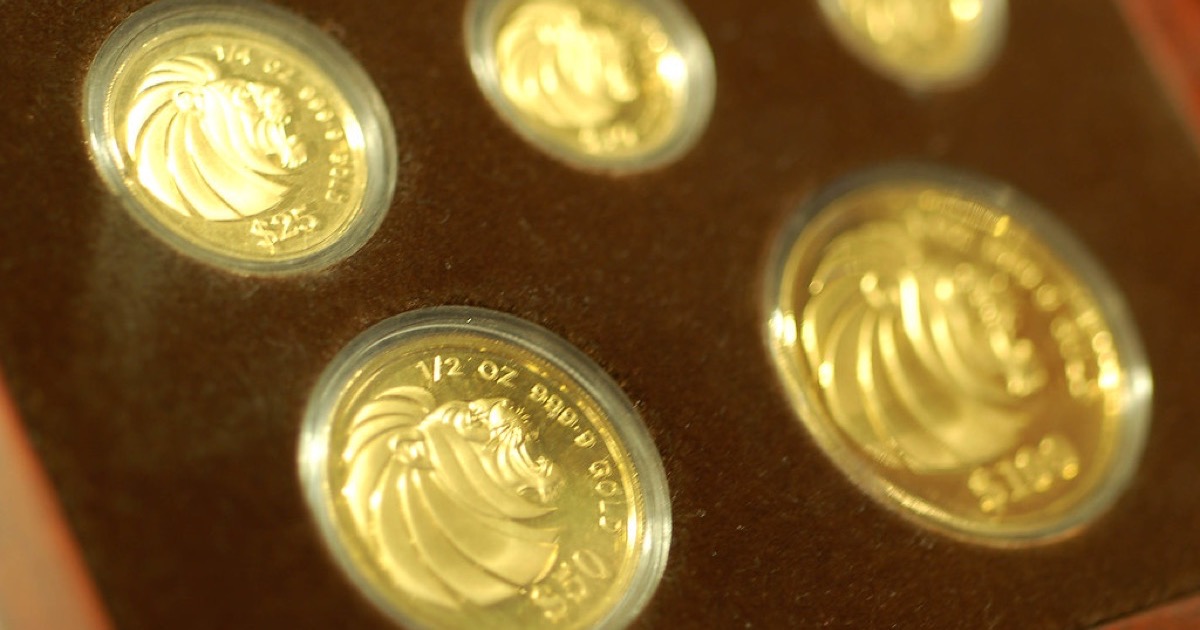
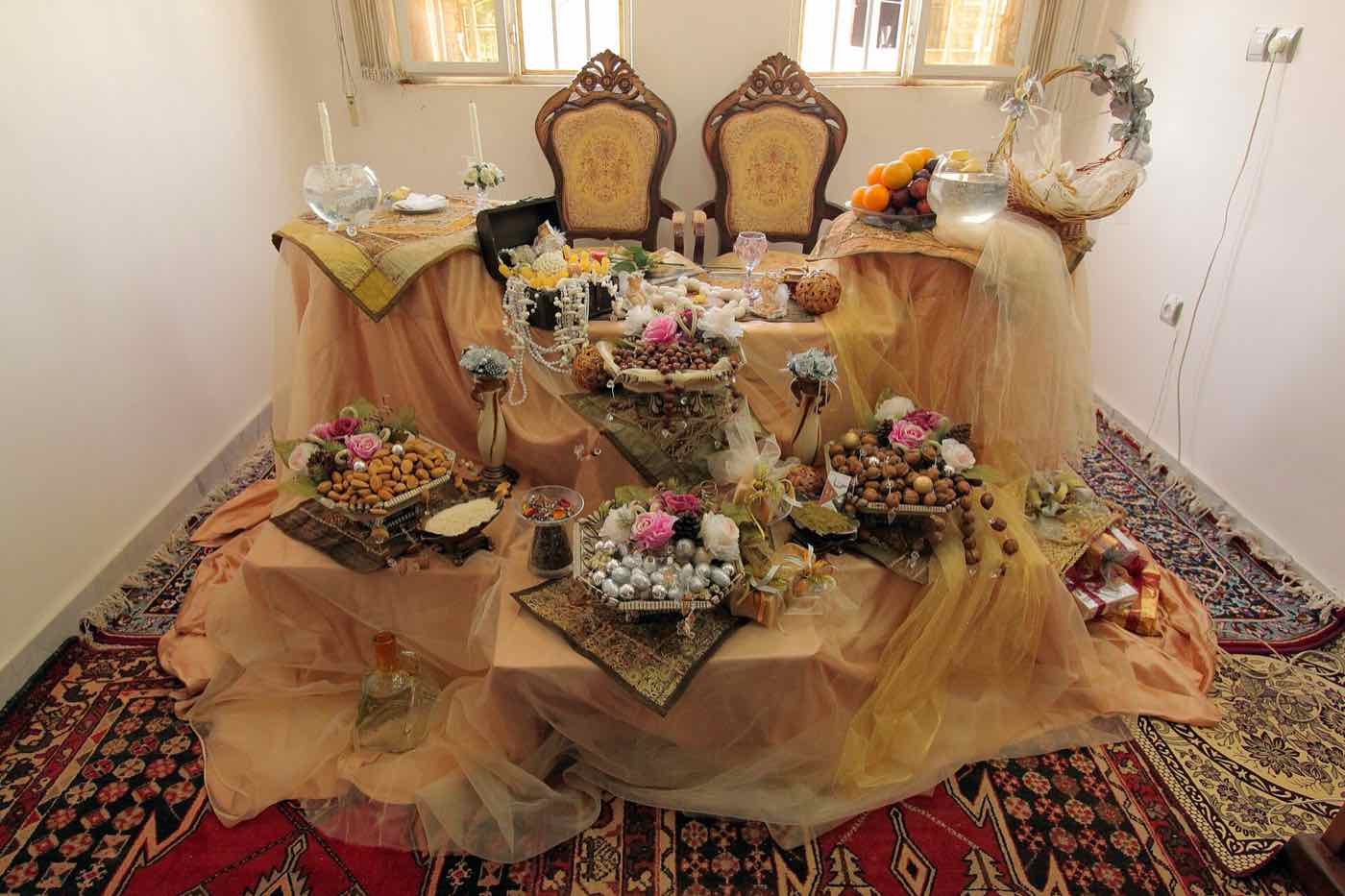
In Iran, gold is the traditional wedding gift for close family. Gold coins are a popular gift at the aghd, given as a full, half or quarter coin, and many people see them as a safe investment to start married life. Jewellery is also common: earrings, a bracelet or a necklace for the bride, and sometimes cufflinks or a watch for the groom. These gifts are often handed over right after the vows at the sofreh aghd, when relatives come forward one by one to congratulate the couple.
Gold also appears in the marriage contract itself: the mehrieh, the gift promised to the bride, is often counted in gold coins. That is a contractual matter for the couple and their families, not a guest gift. Our mehrieh guide explains how it works.
Cash and shabash at the aroosi
Cash is entirely normal at Persian weddings, and nobody will think it impersonal. Guests usually bring an envelope to the reception. Separately, during the dancing, you'll see shabash: relatives and friends showering the couple, or the dancers, with small notes. It is a joyful, noisy expression of generosity, and the money is usually gathered up by a family member. You don't have to take part, but if you'd like to, bring a few small notes. During the knife dance you'll see the groom paying out too.
Kado
کادو
Gift (from the French cadeau). The everyday word.
Hedieh
هدیه
Gift, slightly more formal.
Sekkeh
سکه
Coin. A gold coin is a classic gift from close family.
Shabash
شاباش
Cash showered on the couple or dancers during the celebration.
Jahizieh
جهیزیه
The household goods the bride's family traditionally provides.
Patakhti
پاتختی
A gathering after the wedding, often compared to a bridal shower, where relatives bring presents for the couple's new home.
What to write on a Persian wedding card
A few words of Farsi on the card are always appreciated, even if the rest is in English. These are standard, warm wishes you can copy:
Mobarak bashe
مبارک باشه
Congratulations (literally “may it be blessed”). The default for any happy occasion.
Be pa-ye ham pir shid
به پای هم پیر شید
“May you grow old together.” The classic wedding wish.
Khoshbakht shid
خوشبخت بشید
“May you be happy (fortunate).”
Ishala hamisheh shad bashid
ایشالا همیشه شاد باشید
“May you always be happy.”
How much to give
There is no official Persian rule, and amounts depend on where you live, your relationship to the couple and what you can afford. A sensible approach used by many diaspora guests is the same as at any wedding in your city: think about what is normal locally, then adjust for how close you are. Close relatives traditionally give more, and gold from grandparents or aunts is often a family heirloom-in-the-making. Above all, nobody expects you to stretch beyond your means. A modest gift with a heartfelt card is far better than an awkward one.
Gift mistakes to avoid
- Don't bring a large boxed gift to the reception if the couple have a registry; it creates a storage headache at the venue.
- Don't give alcohol unless you know the couple and their families drink. Many Iranian families do, many don't.
- Don't hand cash directly to the bride or groom mid-conversation. Use the card box, or give it to a parent or sibling collecting envelopes.
- Don't ask the couple how much the gold was, or comment on others' gifts. Gifts are seen, but discussing their value is poor form.
- Don't forget a card. Your name on it matters: many families keep a record of who gave what.
Visiting the couple's family home before the wedding? That is a different etiquette: see our guide to gifts when visiting a Persian home.
Gifts for the couple's families
At a traditional Persian wedding, gifts don't only flow toward the couple. The two families often exchange presents too, especially around the engagement and the aghd, as a sign of respect and goodwill. These are usually arranged quietly between parents and can range from flowers and sweets to clothing or jewellery. If you are the partner marrying into an Iranian family, it is worth asking your fiancé or fiancée whether your parents are expected to bring anything to the baleh boroon or aghd, so nobody is caught off guard.
Frequently asked questions
What is a traditional Persian wedding gift?
From close family, gold is traditional: gold coins or jewellery, often given at the aghd ceremony. From most other guests, cash in a card is normal and welcome. In the diaspora, registry gifts are increasingly common too.
Is it OK to give cash at a Persian wedding?
Yes. Cash is completely normal and appreciated at Persian weddings. Put it in a card with your name and a short wish, and leave it in the card box or with a family member at the reception.
What is shabash at a Persian wedding?
Shabash is the custom of showering the dancing couple, or the dancers, with small notes during the celebration. It is a sign of joy and generosity. Guests can join in with a few small notes, but it is separate from your main gift.
When do you give the gift at a Persian wedding?
Close family often give gold or jewellery right after the vows at the aghd. Most guests give their gift at the aroosi, the reception. If you attend both events, one gift is enough.
What should I write in a card for a Persian wedding?
“Mobarak bashe” (congratulations) and “be pa-ye ham pir shid” (may you grow old together) are the classics. Add a personal line in English and your full name so the couple know who it is from.
Before the gifts, the gold and the shabash, there's meeting someone. Delband is a free iPhone dating app for the Persian community, with nearby matches and city chat rooms, for people who'd like to be the ones opening the cards one day.